Across Continents Animal Park
Spain
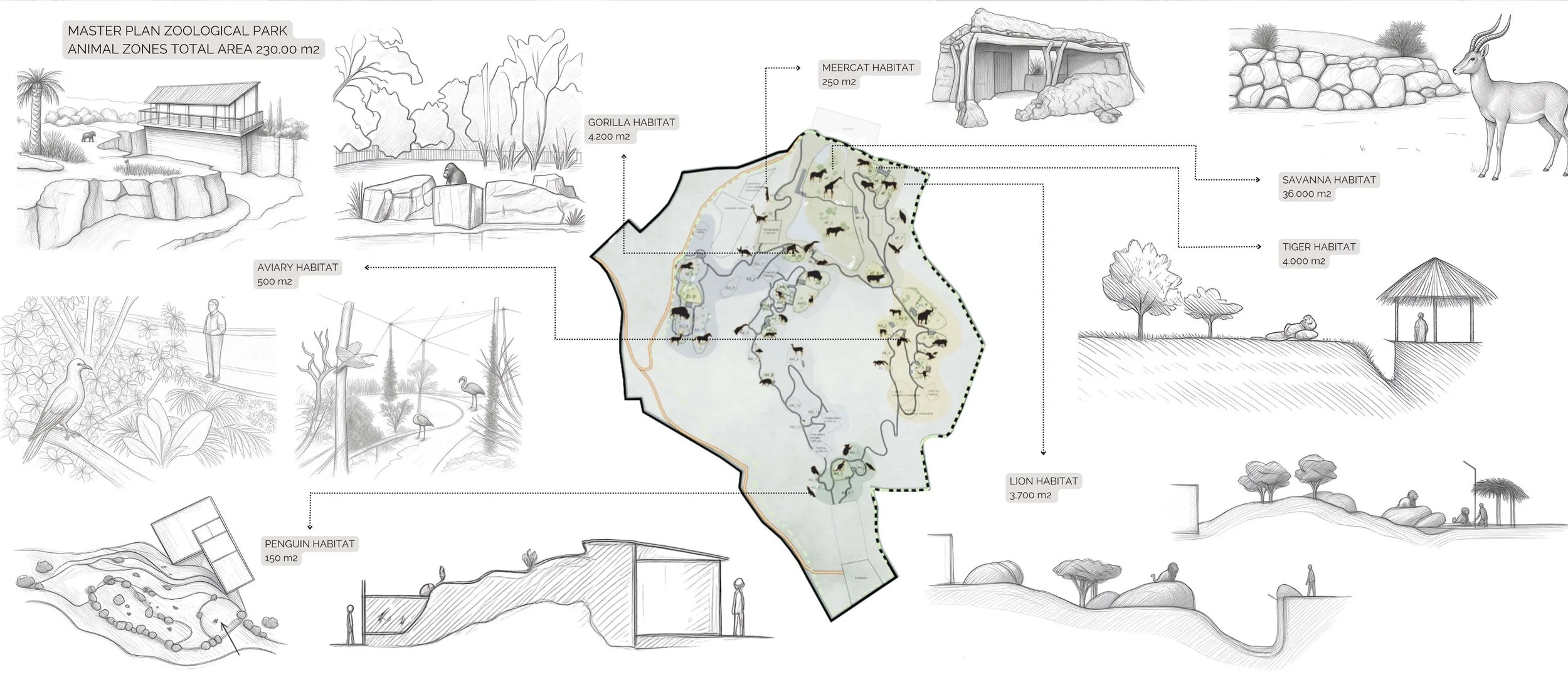
Animal zone: 230,000m2
Total area: 195ha
The Design Response
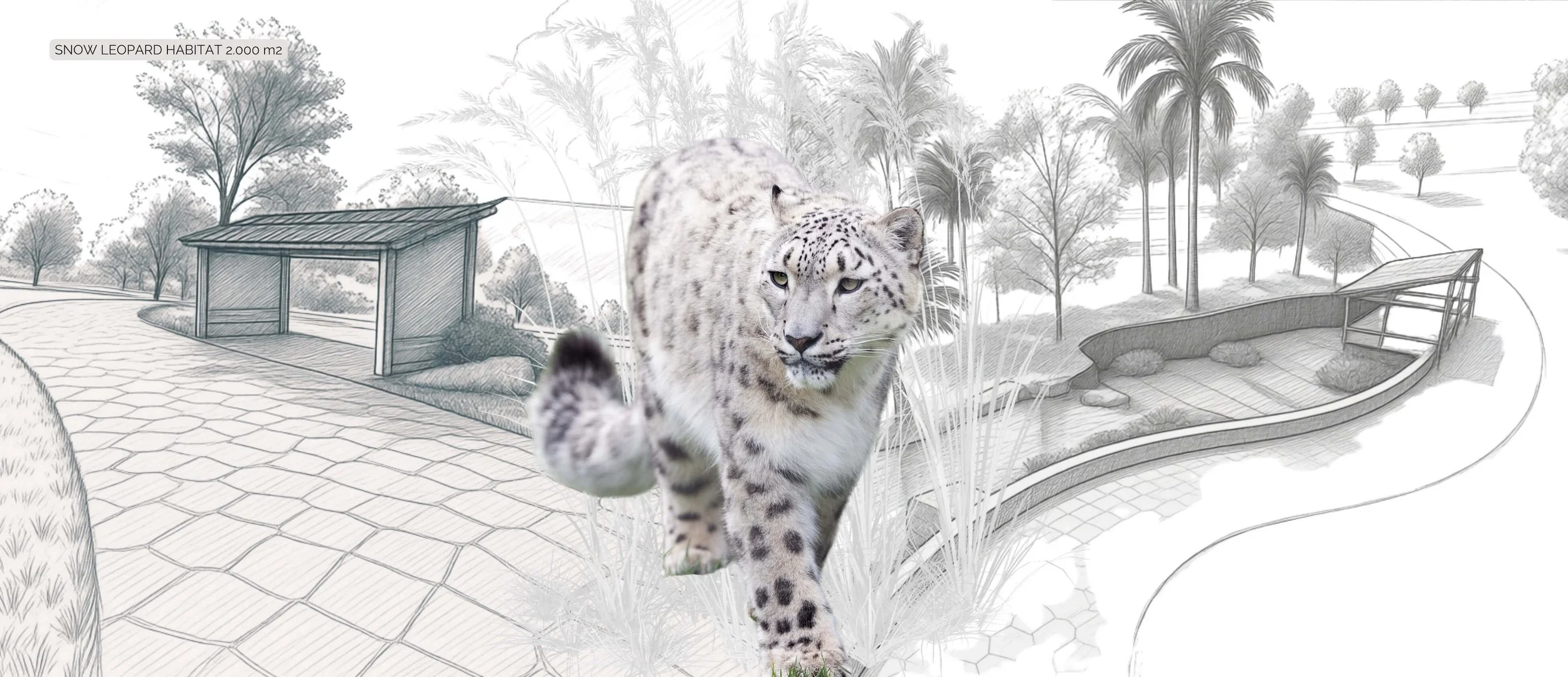
The site’s natural topography — valleys, hills, and forested areas — became the primary organising tool. Flat valleys were assigned to species that need them. Elevated and varied terrain was reserved for animals that use it. Natural features act as separation barriers wherever possible, minimising hard infrastructure and keeping the landscape legible and low-impact.
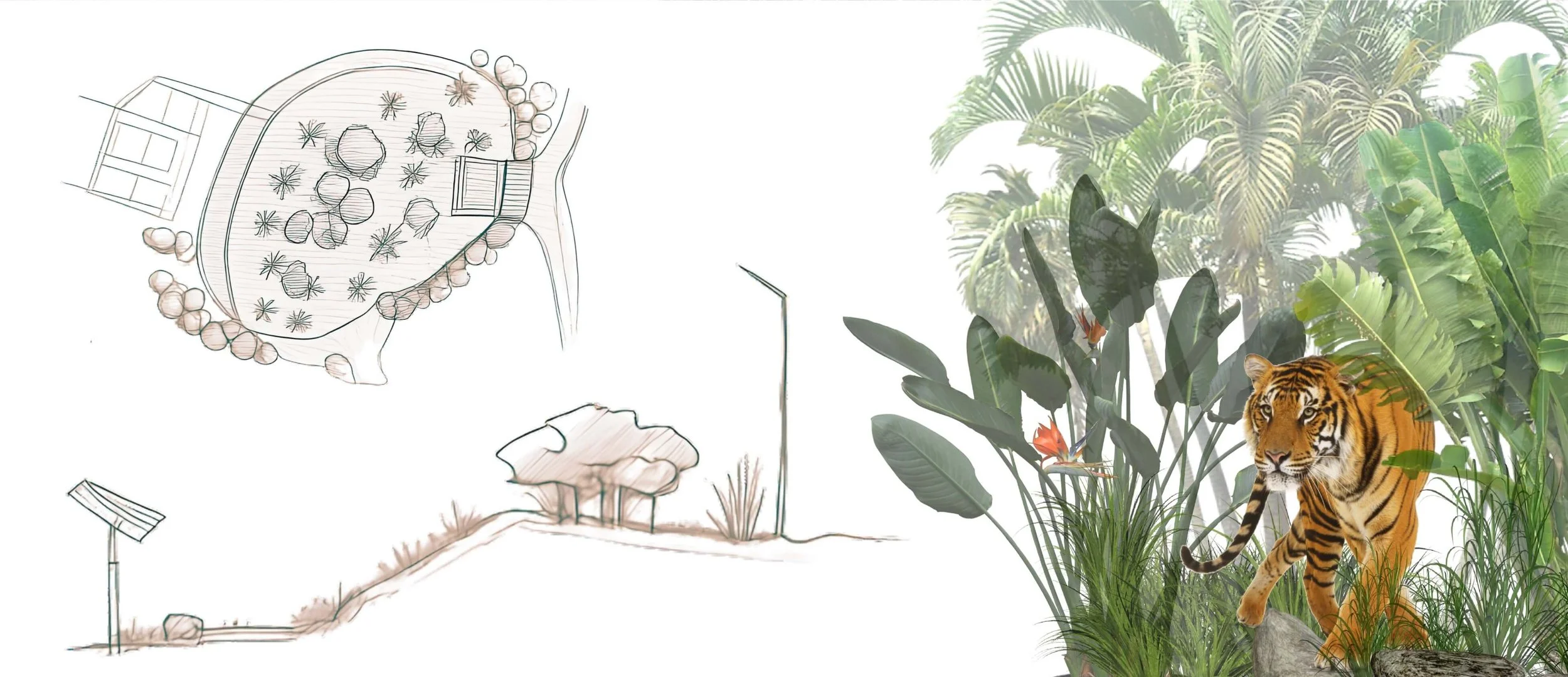
Each continental zone was planted and themed in the vernacular style of its region — subtle, grounded, and never decorative for its own sake. Water bodies were introduced where species required them, integrated into the terrain rather than imposed on it.
Visitor experience was shaped using neuroarchitecture principles of fascination, coherence, and hominess — creating a journey that feels intuitive and navigable without signposting every step. Each continent offered its own visitor features. Zip lines, natural playgrounds with climbing structures and slides, and species-specific encounter points gave families and children active, physical engagement with the landscape.
The Animal Brief
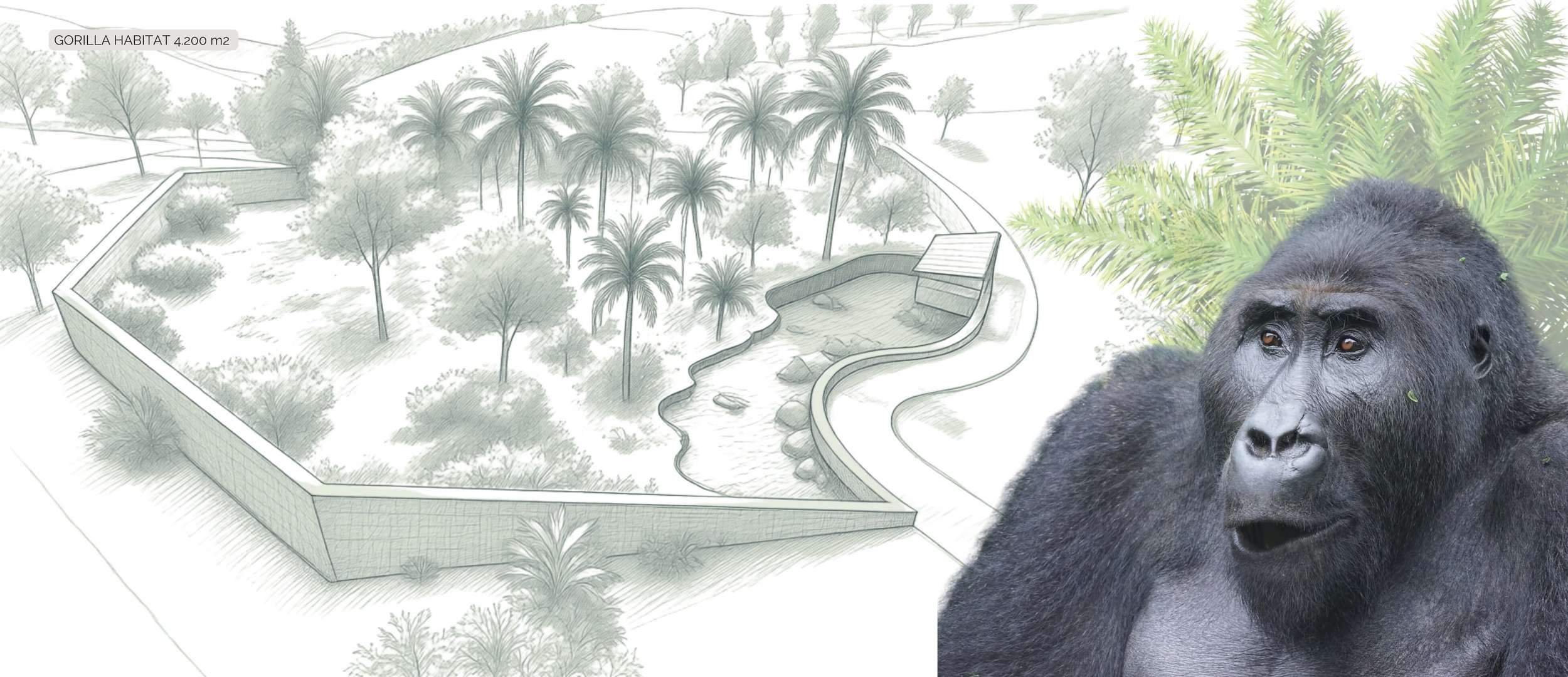
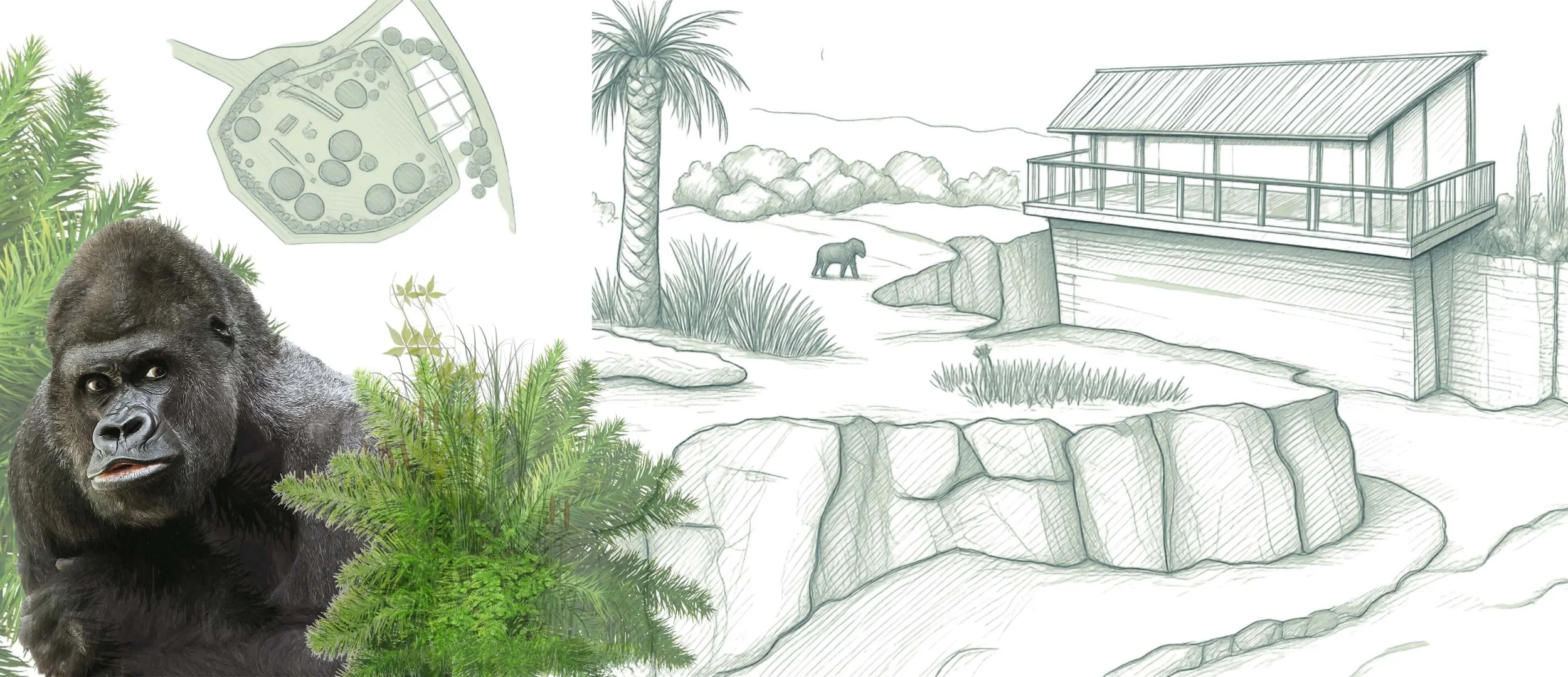
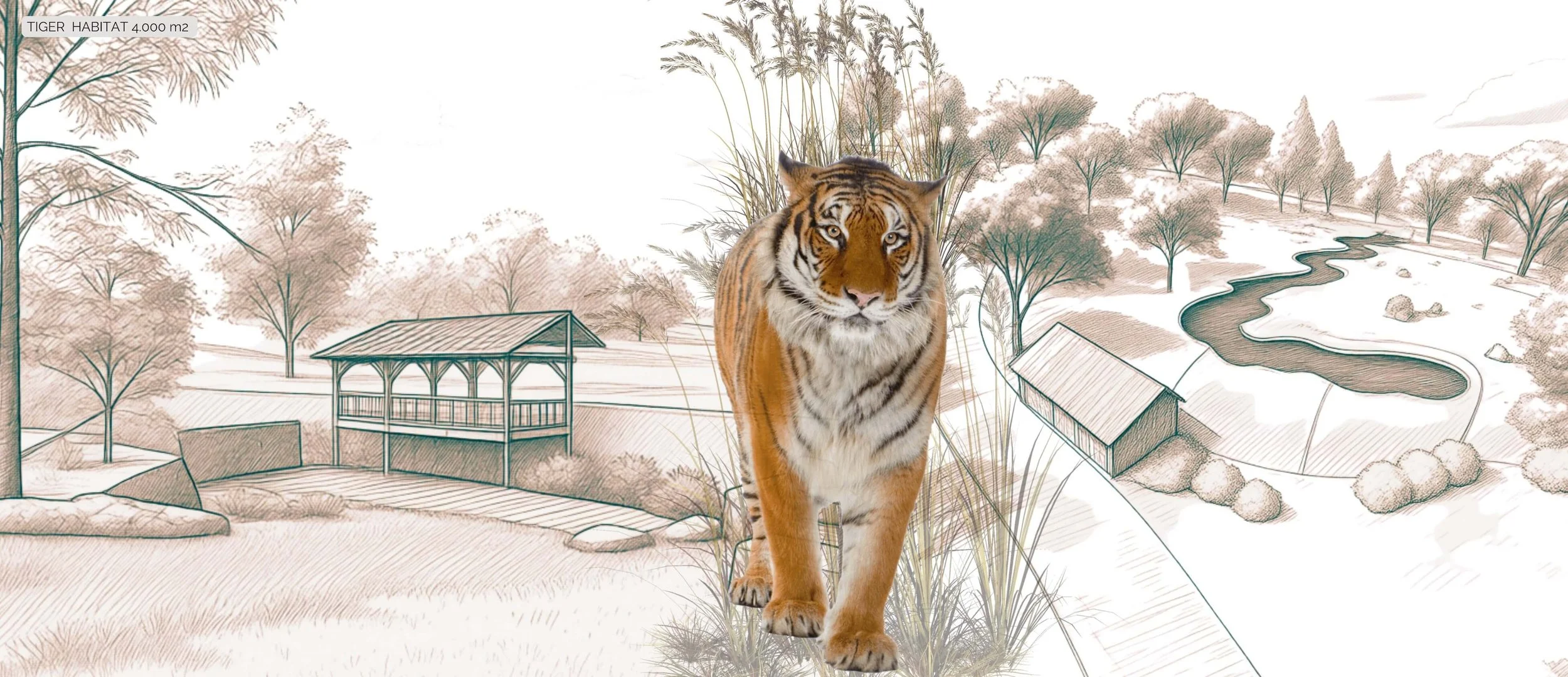
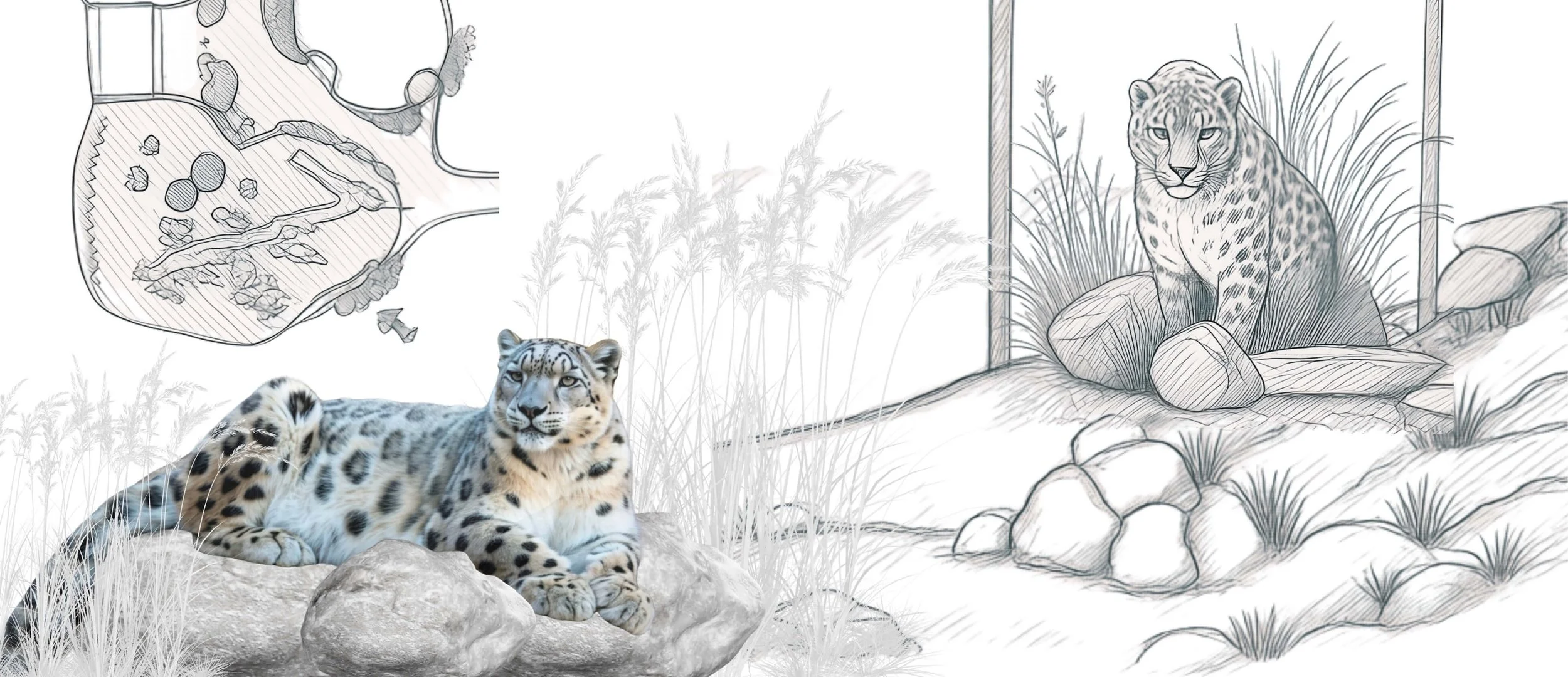
The park was designed around a continent-based collection — Europe, America, Asia, and Australia — each zone housing species native to that part of the world. Animals include elephants, rhinos, giraffes, European bison, Przewalski horses, koalas, kangaroos, wallabies, orangutans, and tigers. Each species came with specific spatial requirements: flat valley terrain for giraffes, open expanses for herd-living Przewalski horses, elevated and varied ground for mountain-adapted species, and secluded zones for solitary animals. The plan had to honour these differences across a single, coherent landscape.
The Challenge
The commission was clear and well-structured — a master plan delivered through coordinated collaboration with a team of specialists across relevant disciplines. The work required precise matching of species to terrain, introducing water bodies where the land had none, and integrating planting schemes suited to each animal collection. The result was a plan built on clear frameworks and direct communication throughout.
The Outcome
A master plan where the land defines the collection and the collection defines the experience. Species are placed where the terrain already works for them. Visitors move through four continents in a landscape that feels discovered rather than designed — engaging, navigable, and rooted in the natural world.