Rewilding Park
Spain
Total Area: 160ha
The Design Response
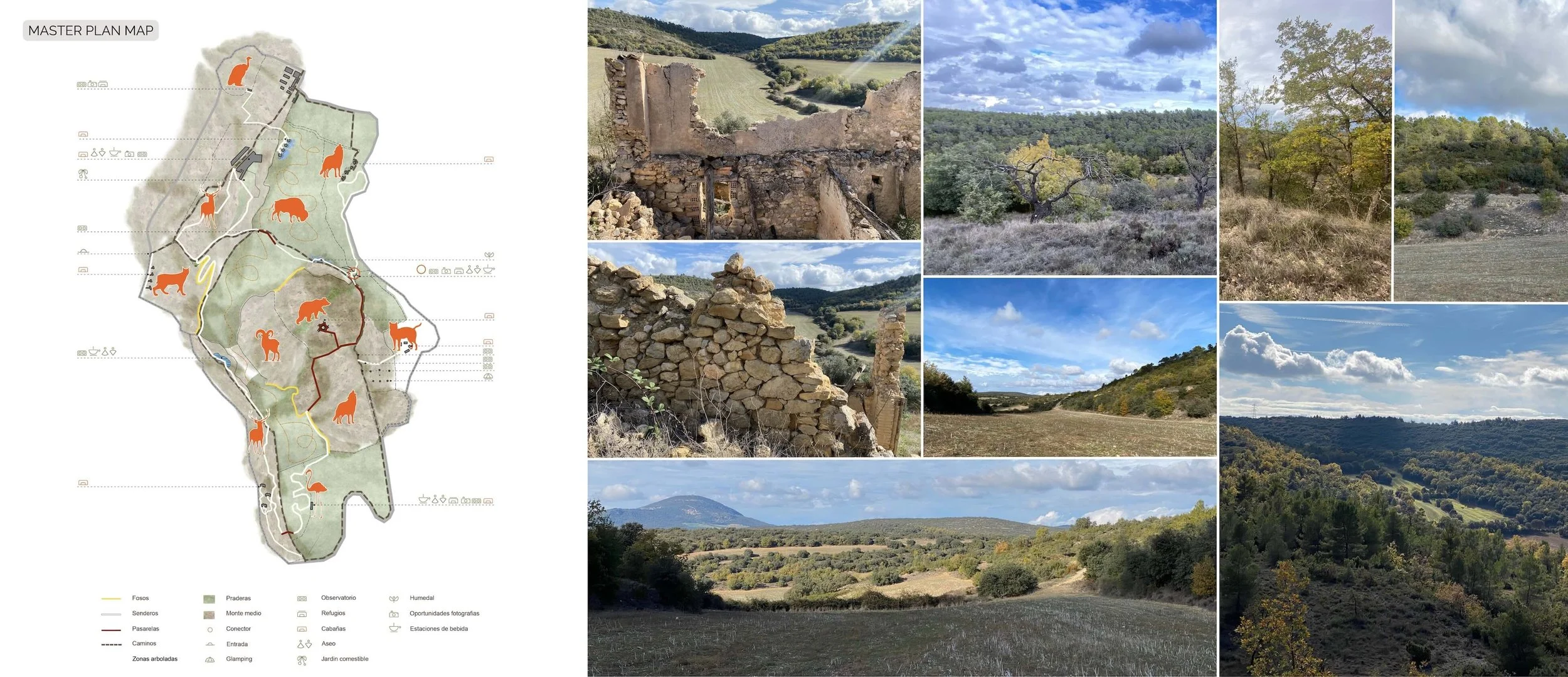
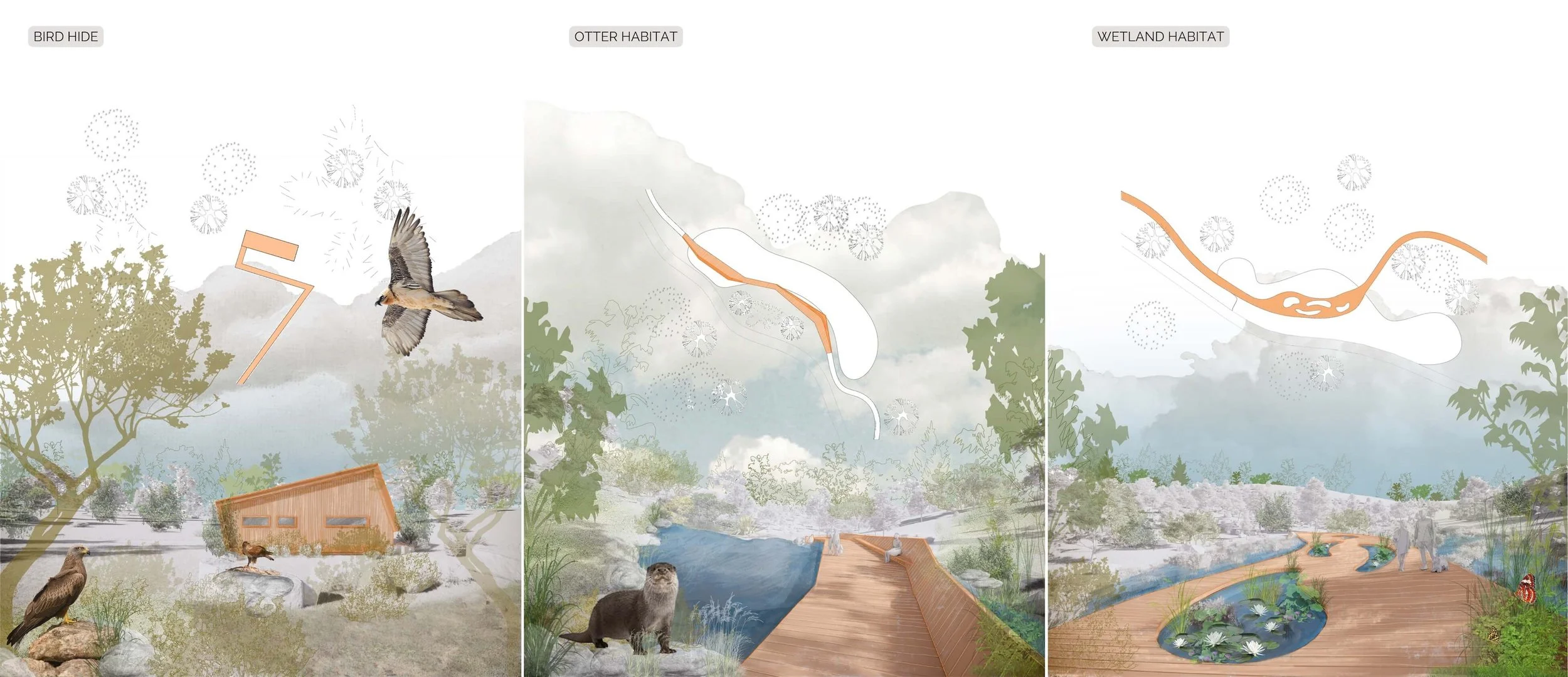
The plan is organised around a rotational zoning system, allowing controlled movement of animals between areas while supporting land regeneration. A central connector building enables species rotation and operational management across the site. Habitats are zoned across the terrain — recreated wetlands, birdwatching areas, an otter zone, and dedicated wildlife corridors — each responding to the specific needs of its inhabitants.
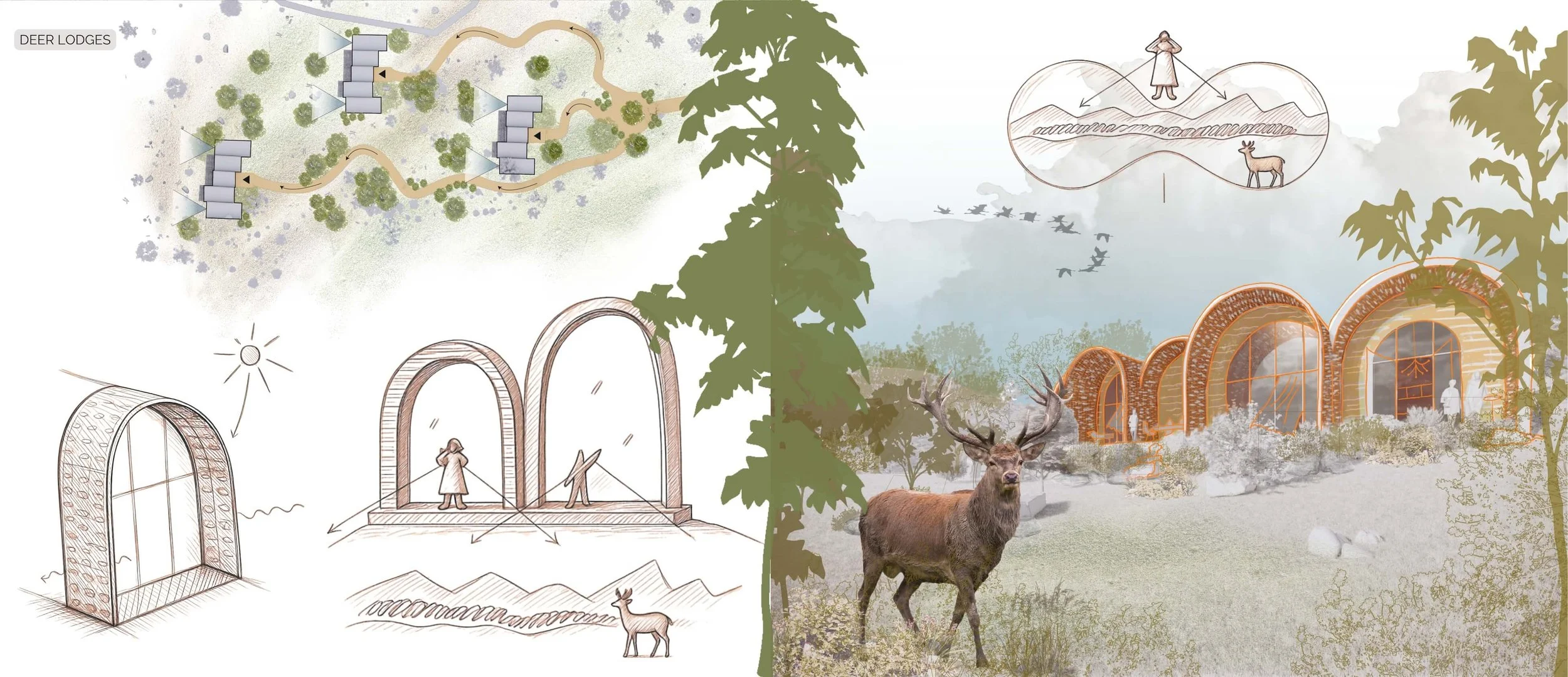
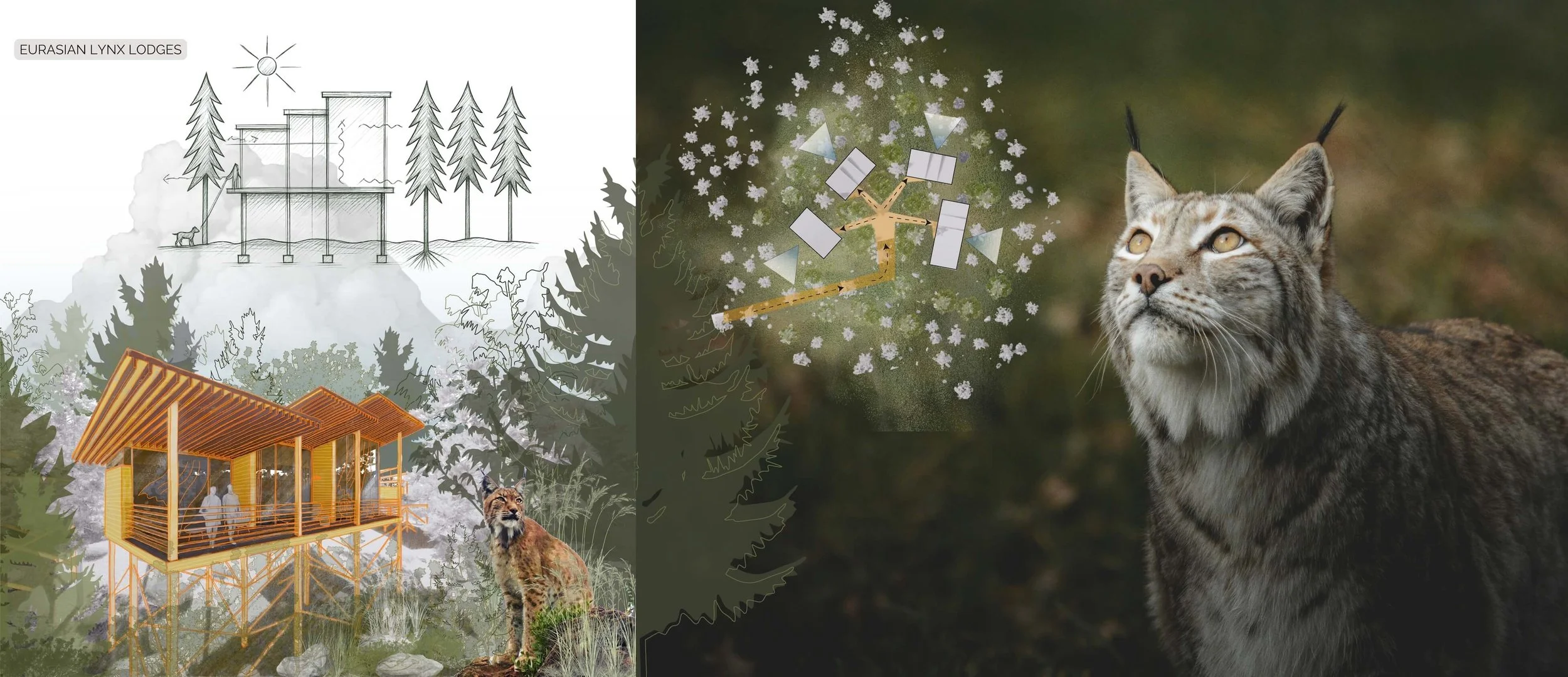
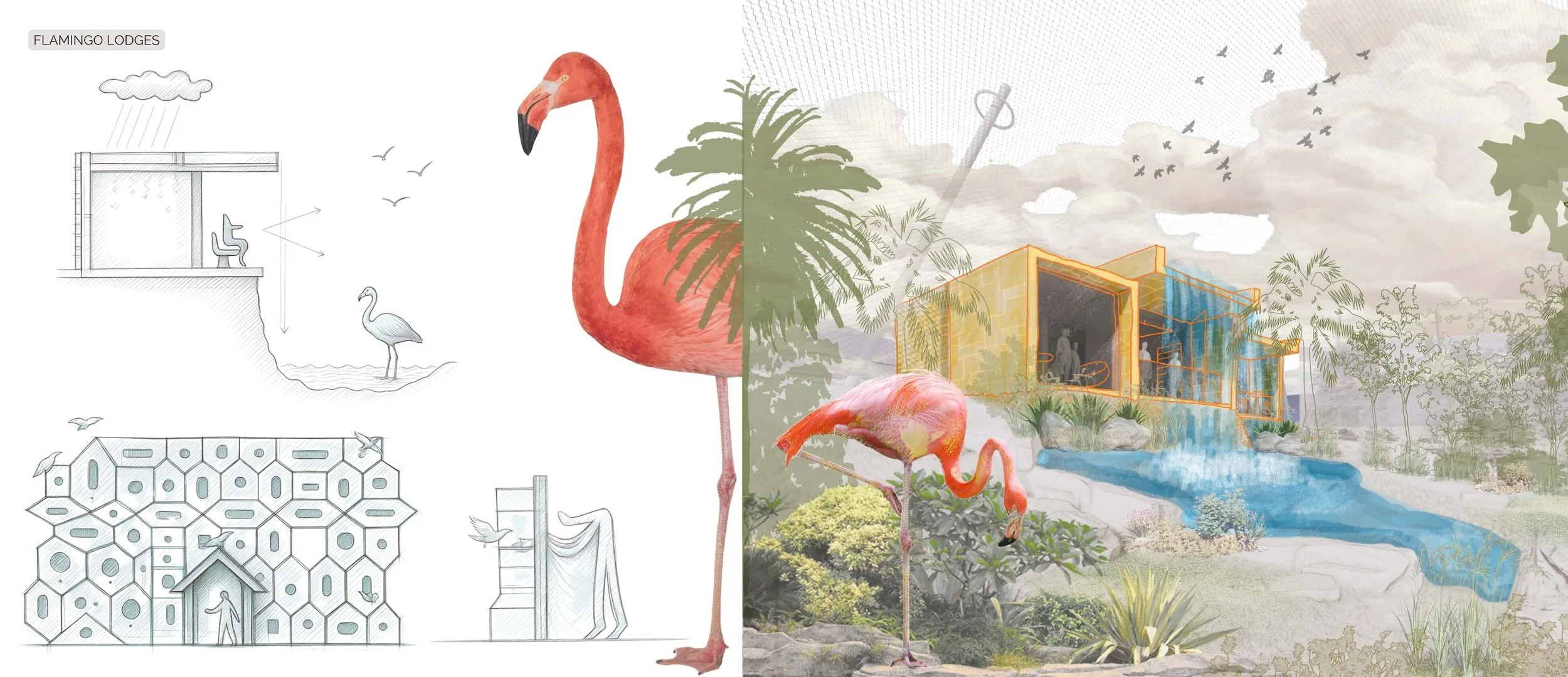
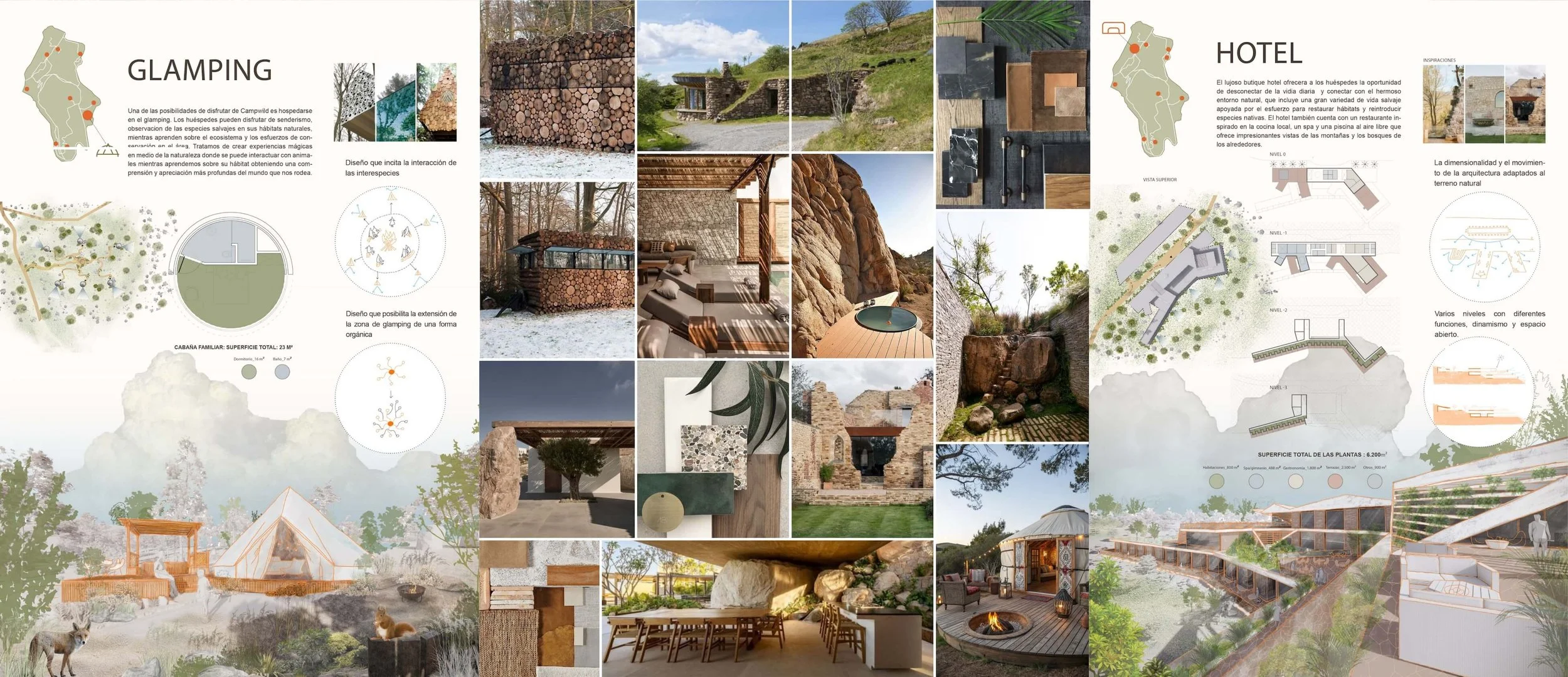
Tourism accommodation, including a central hotel, bungalows, and a glamping zone, is integrated without dominating the landscape. Existing Spanish farm ruins were preserved as heritage features. An edible garden is woven into the visitor programme. Road systems were planned for minimal land disturbance throughout.
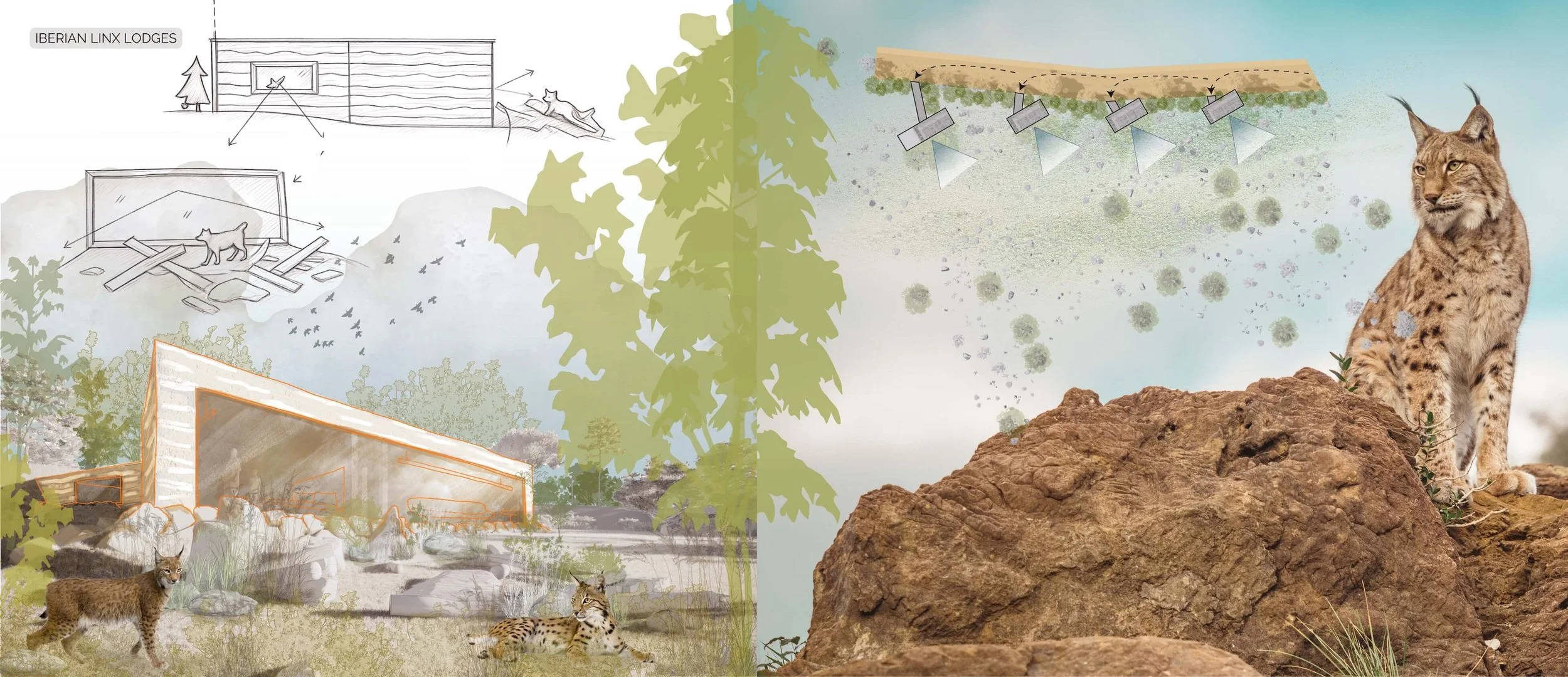
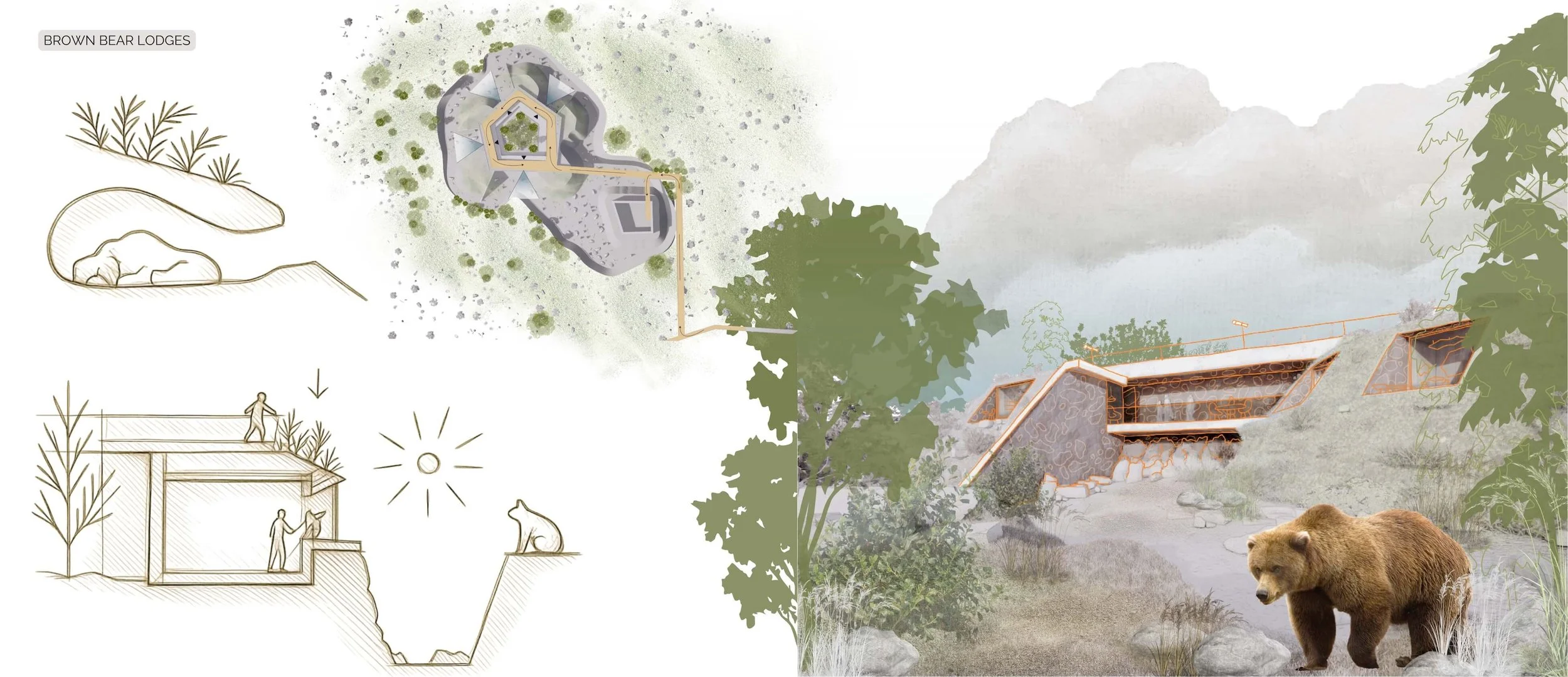
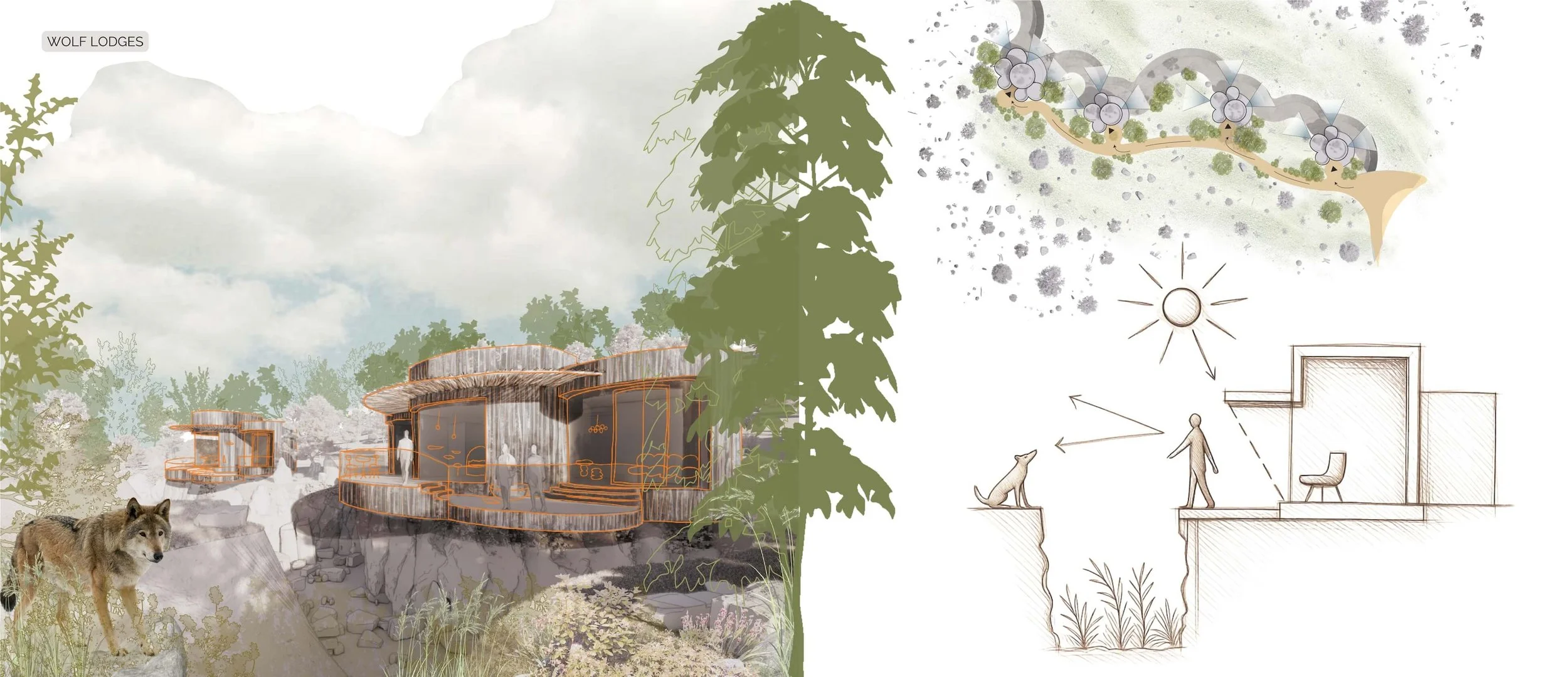
Architecture is designed to blend into the landscape rather than impose on it. The project was developed in collaboration with wildlife consultants, ecological regeneration specialists, and local teams.
The Animal Brief
The park was designed for a diverse range of species — otters, wolves, brown bears, Iberian lynx, Eurasian lynx, European bison, deer, flamingos, and birds. Each species brings distinct spatial, behavioural, and ecological needs. The master plan had to create conditions where animals could move, forage, and live within a landscape that functions as a genuine ecosystem — not a managed collection.
The Challenge
Designing across 160 hectares of varied terrain means every decision has ecological consequences. The core challenge was developing a rotational system that balances animal movement, operational management, and visitor access — without compromising the integrity of the land. Heritage structures on site, existing road networks, and the need to introduce tourism infrastructure all had to be resolved without disturbing the rewilding intent.
The Outcome
A master plan for a living, working rewilding landscape — where ecological regeneration, animal agency, and visitor experience are designed as one system. Every layer of the site, from wetlands to walking routes, serves both the land and the species that inhabit it.