Gorilla Habitat
Mysore ZOO, India
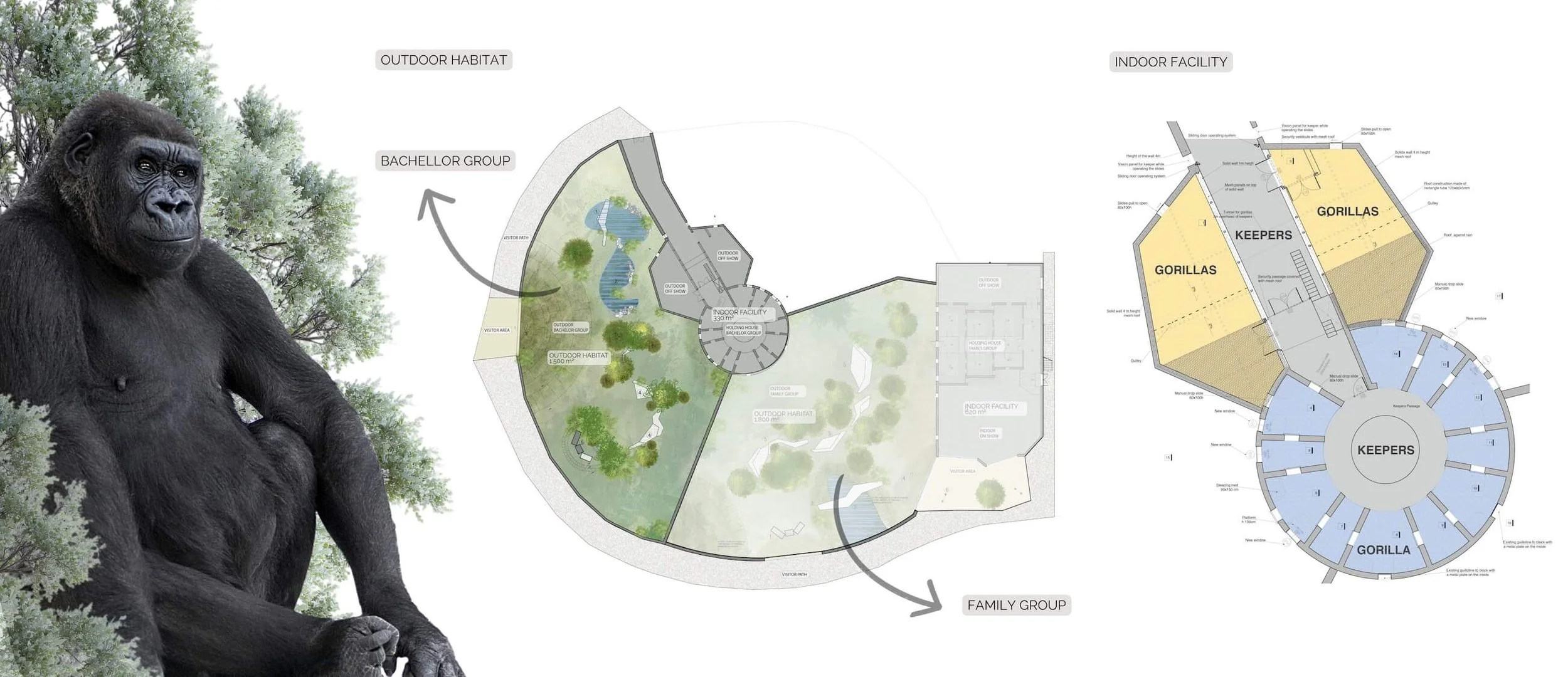
Outdoor Habitat
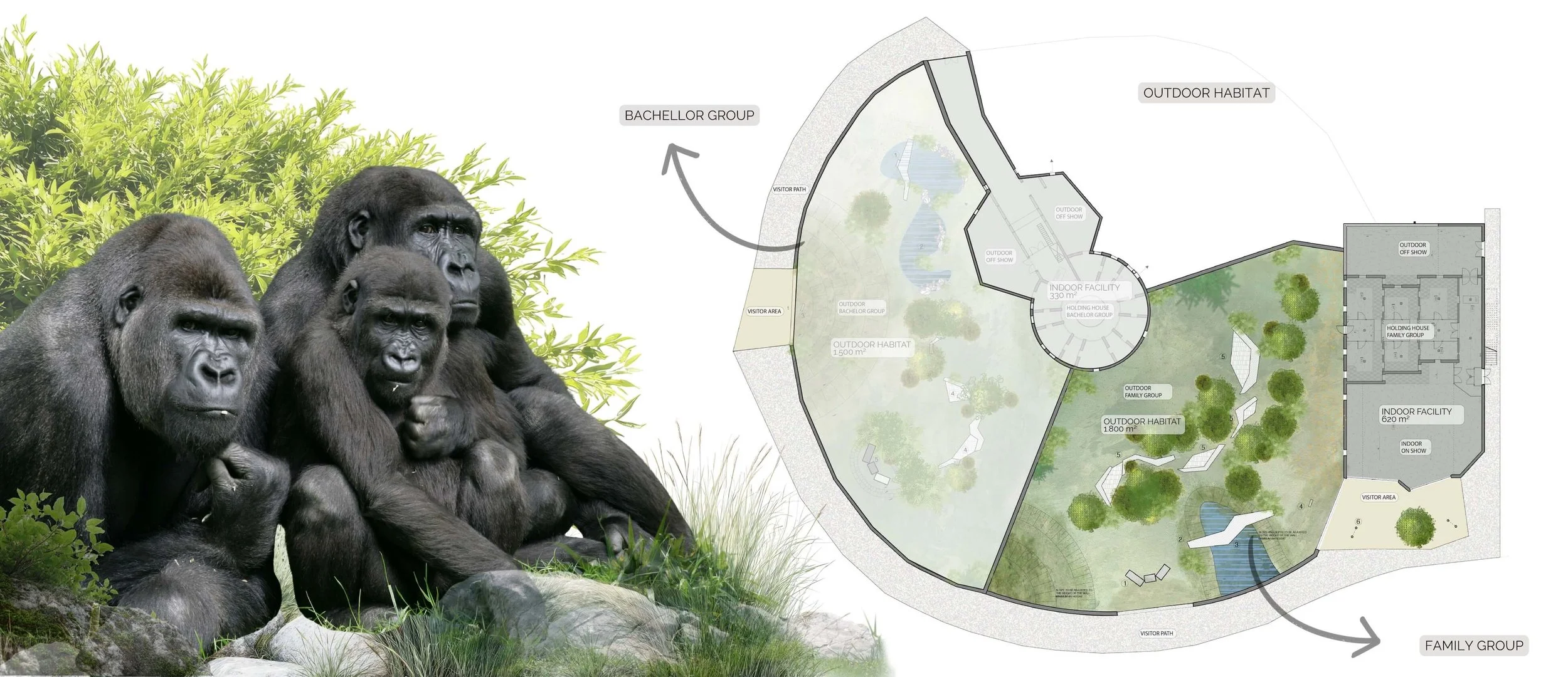
Bachelor Group: 1.5000m2
Family Group: 1.8000m2
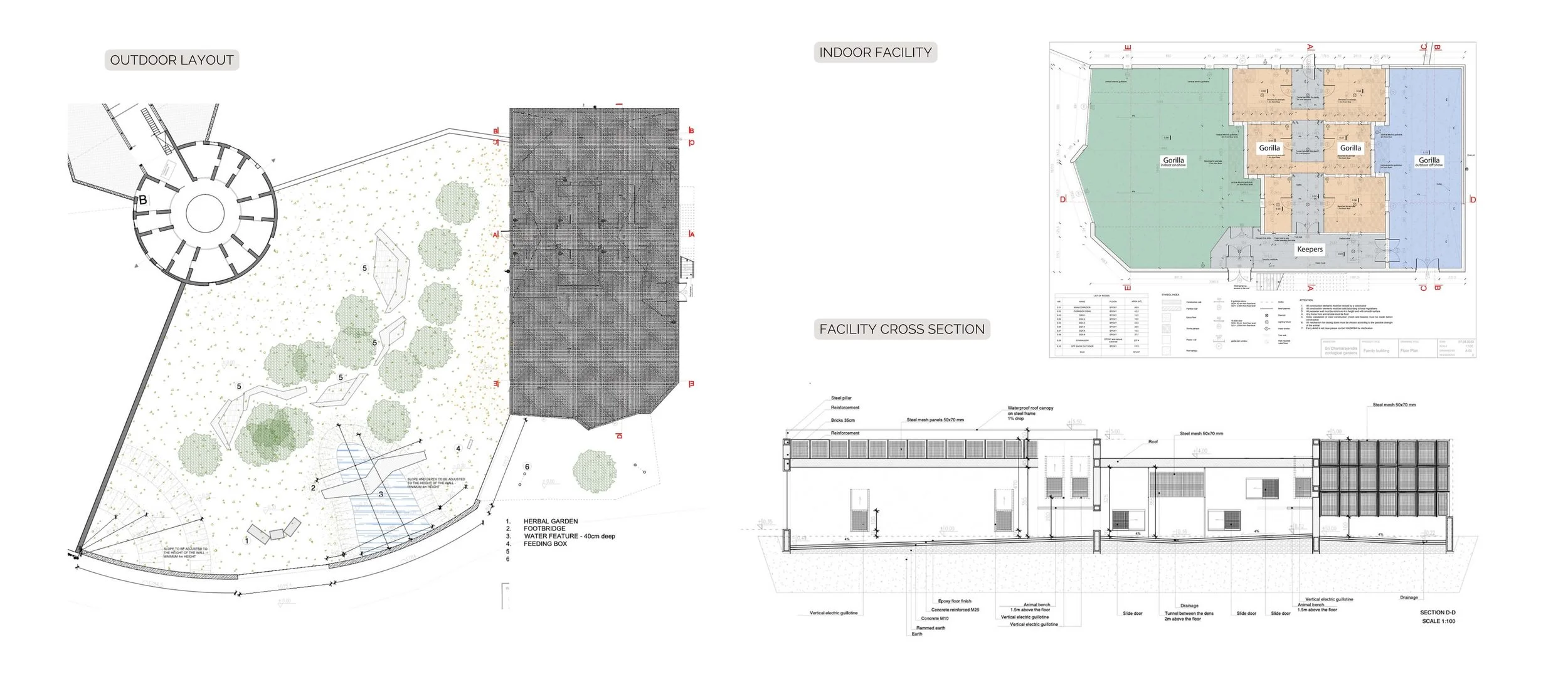
Building Facility
Bachelor Group: 95m2
Family Group: 620m2
The Design Response
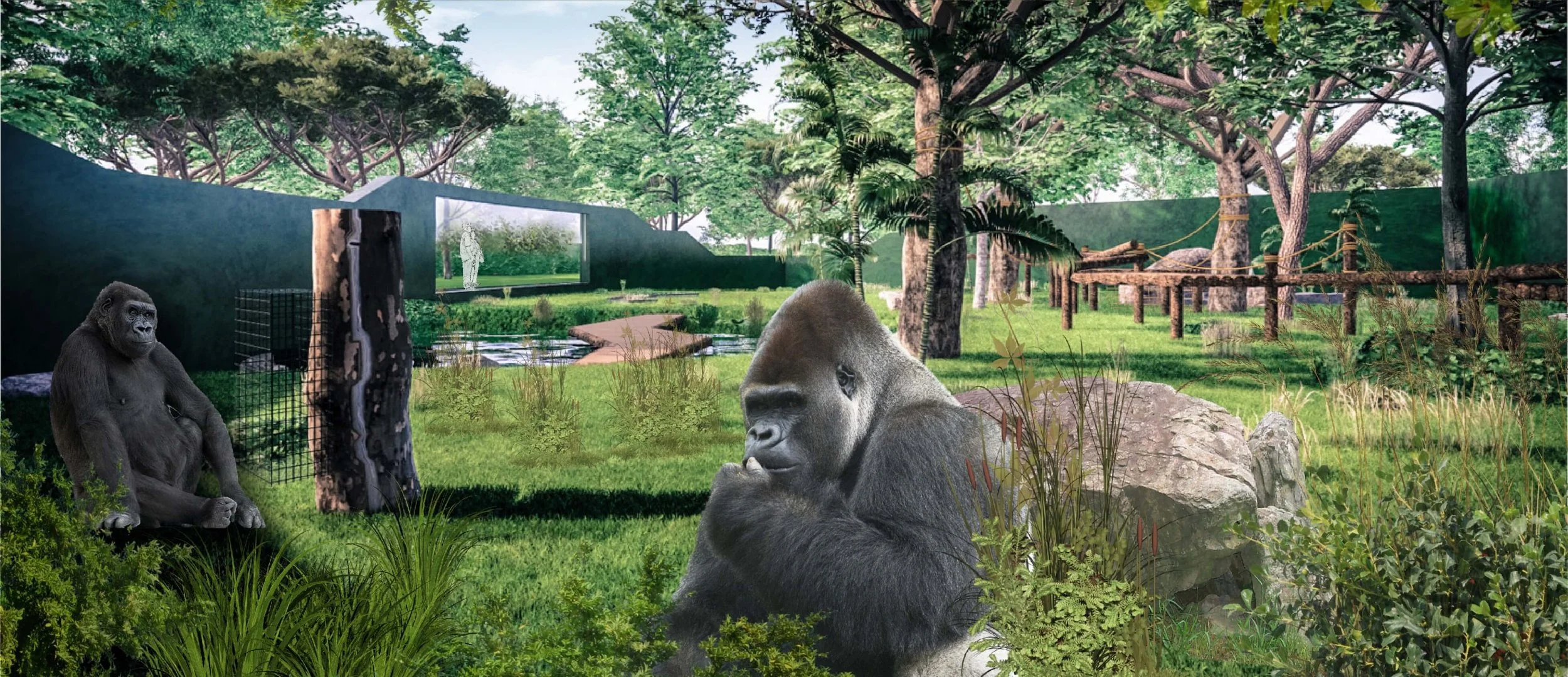
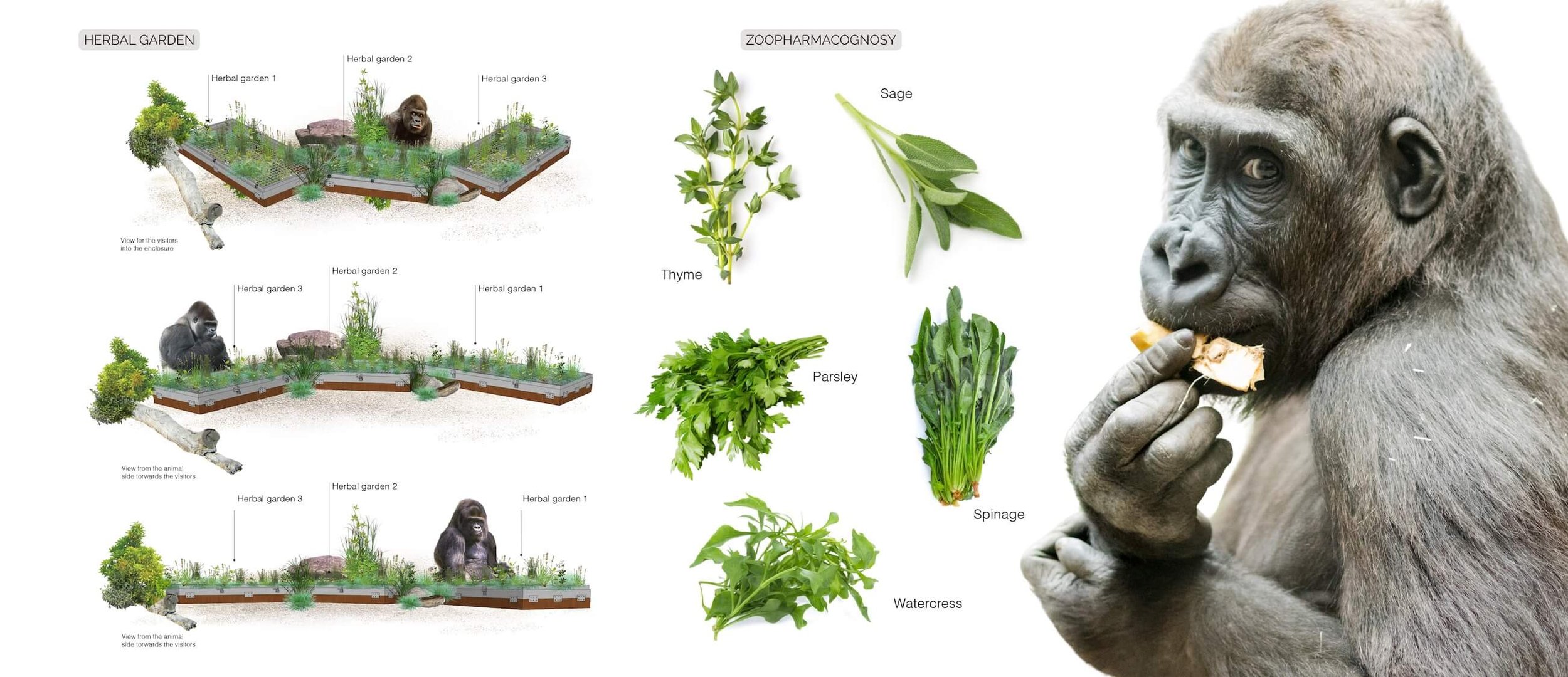
Bachelor Group The existing circular building was adapted and extended with two outdoor wings — giving bachelors space, fresh air, and choice even off-show. A water feature with a gorilla-safe bridge leads to a feeding station, encouraging animals to seek and problem-solve. A herbal garden introduces zoopharmacognosy — gorillas choosing their own herbs. Terrain variation, dense mature vegetation, and built-in enrichment create a habitat where agency is structural, not an afterthought.
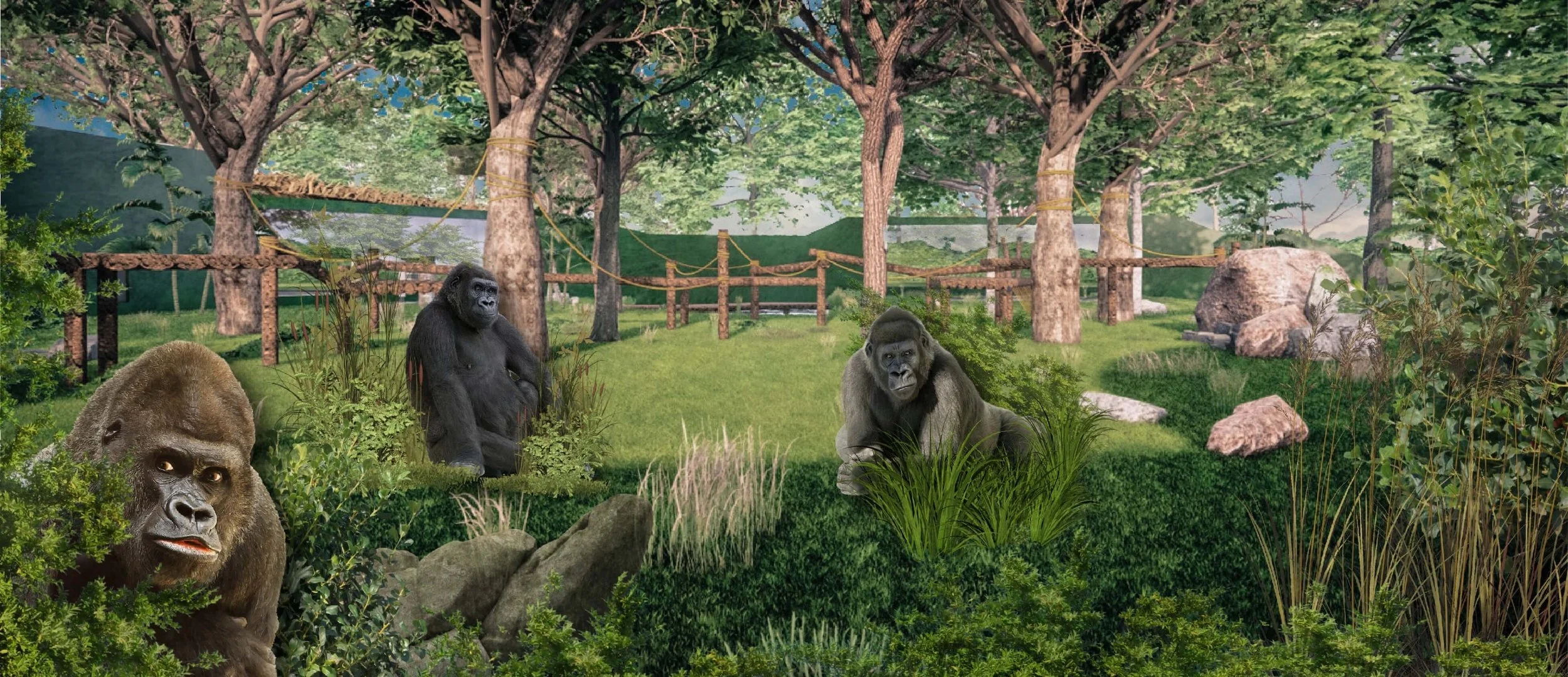
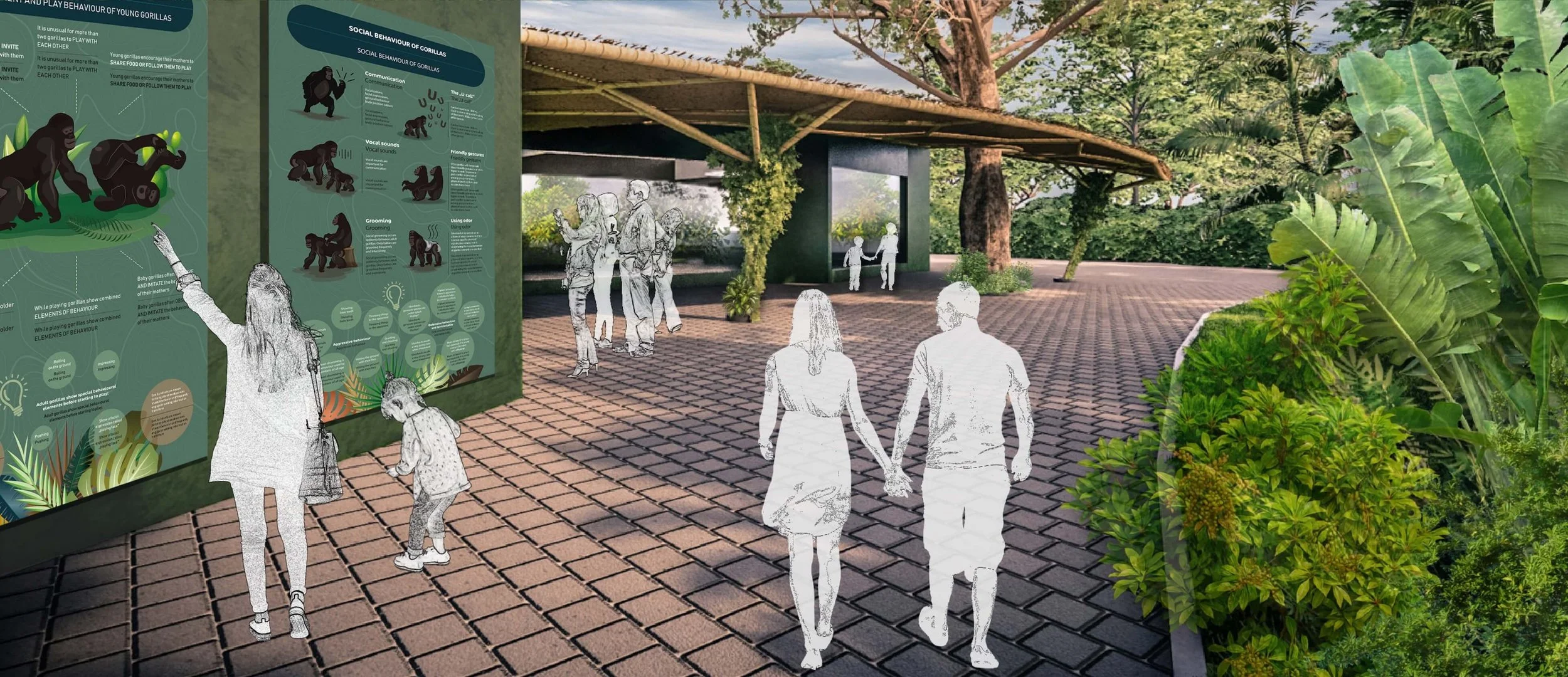
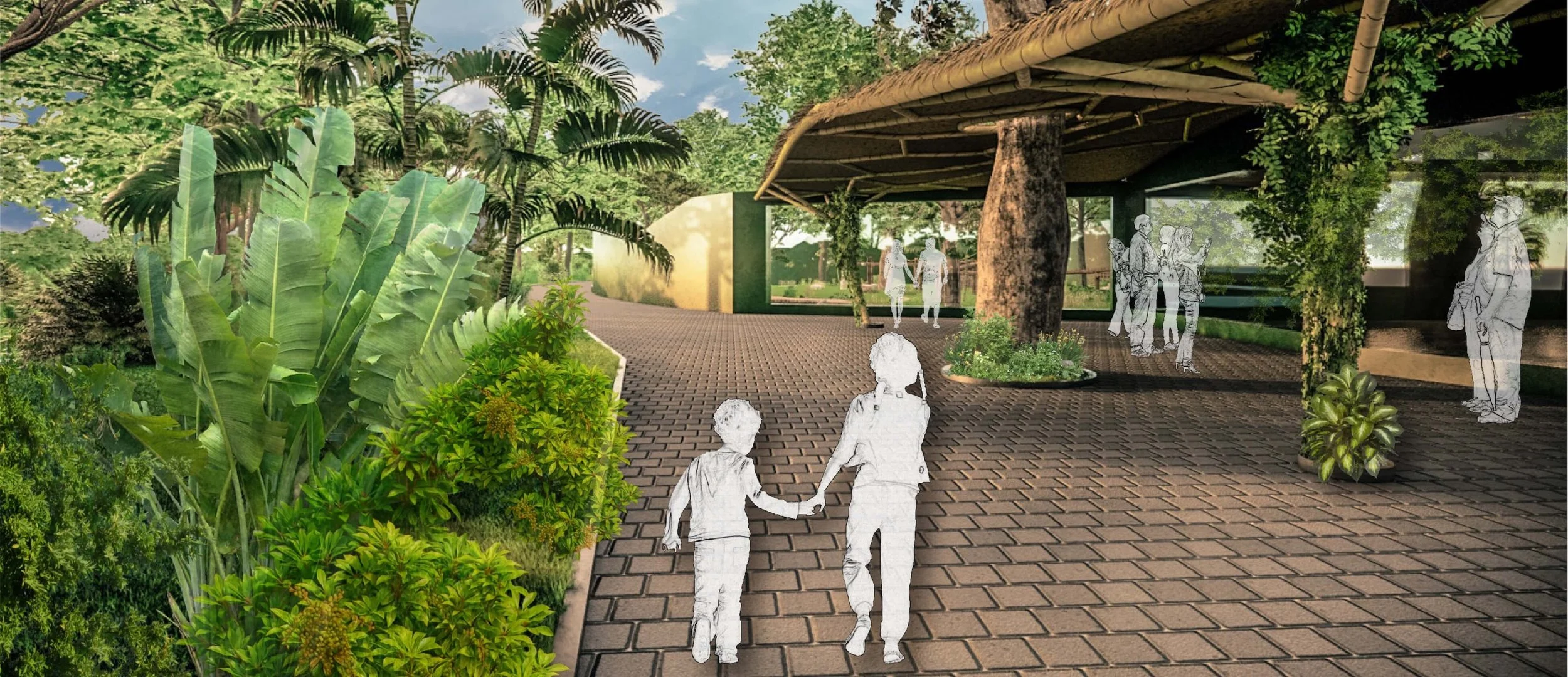
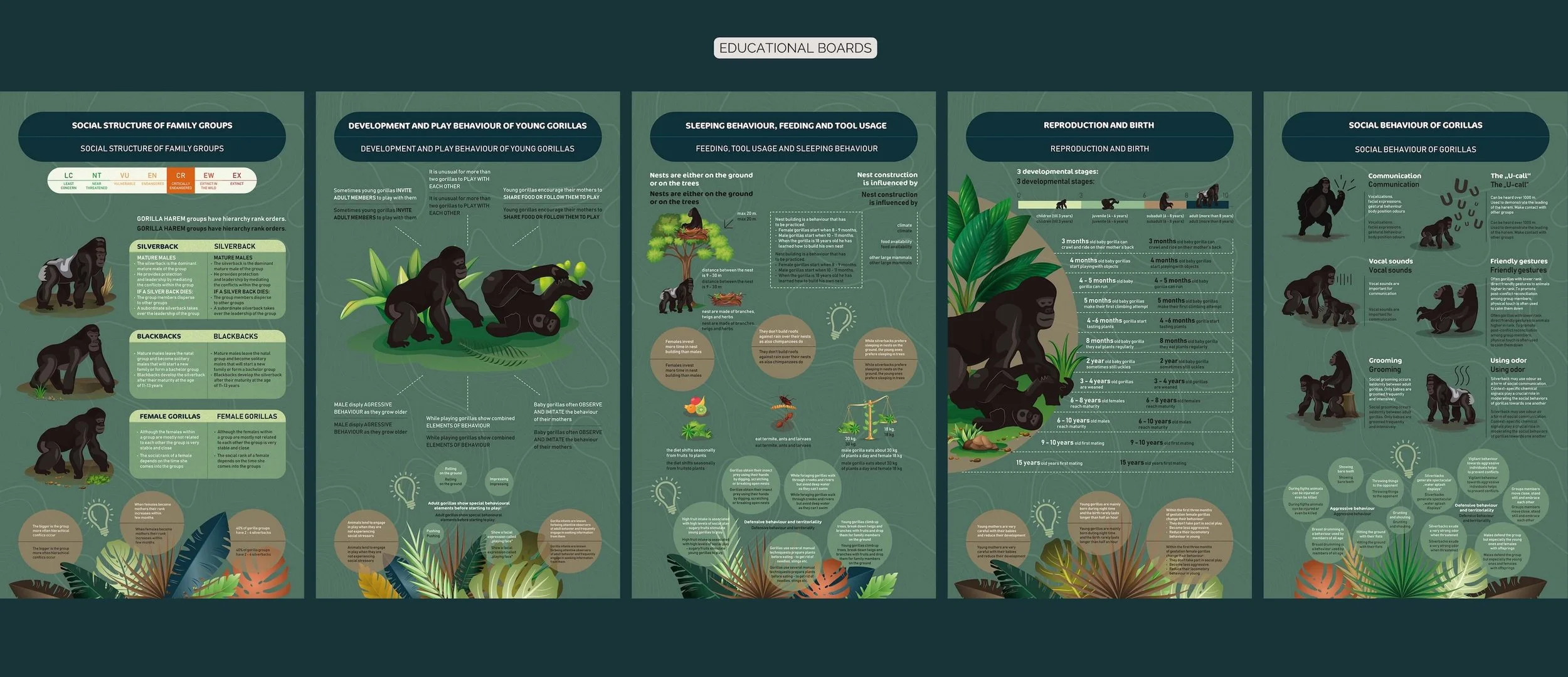
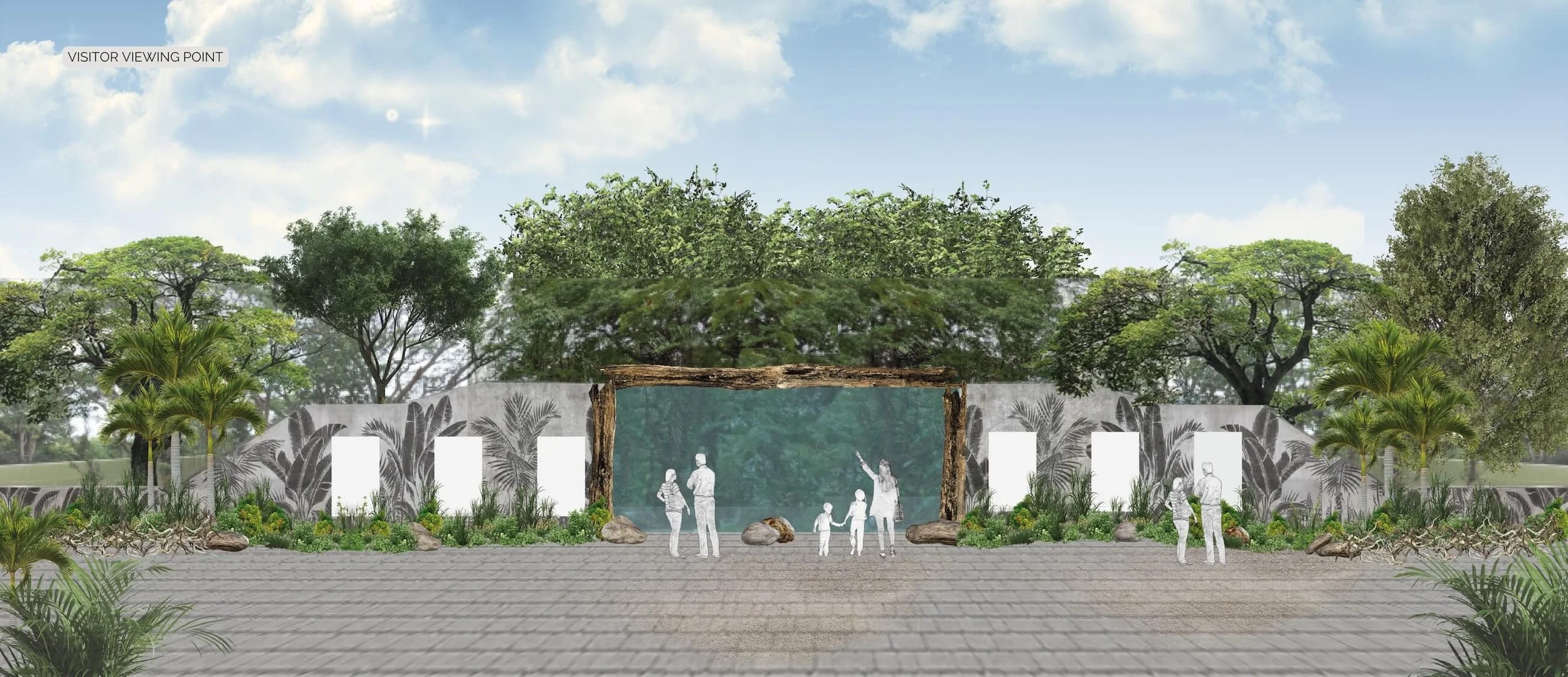
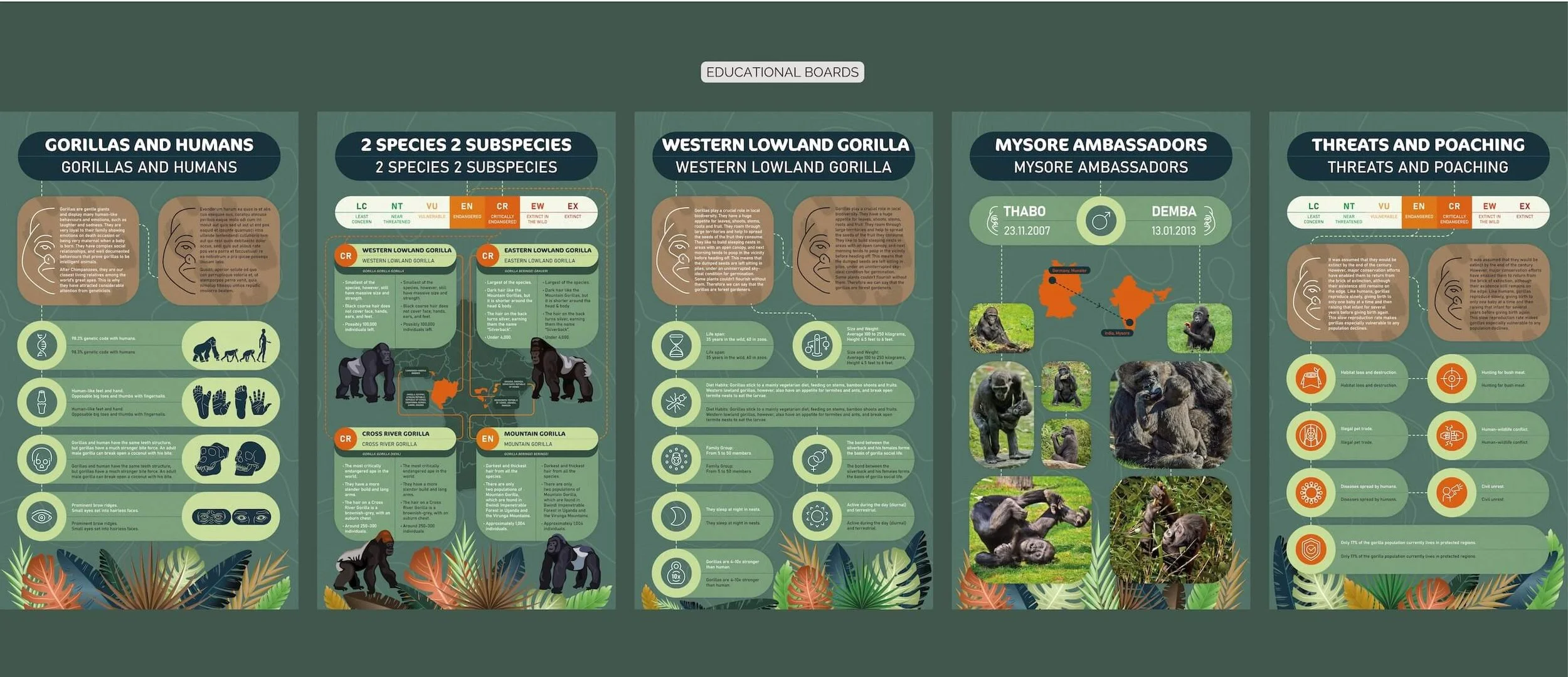
Family Group A new build from the ground up. The indoor gymnasium gives gorillas the choice to be inside or out — always visible through carefully angled viewing points that reduce frontal sightlines and animal stress. Outdoors: water feature, bridge, herbal garden, terrain variation. One mature tree in the visitor area was preserved in place — a roof built around it, blending architecture with nature. Graphic boards complete the visitor experience with the same aesthetic language as the architecture.
The Animal Brief
Mysore Zoo — founded in 1892 by Maharaja Chamaraja Wadiyar X — had been without gorillas for years. The decision to bring the species back came with a clear ambition: do it properly. Two habitats were designed within a shared circular plot: one for a bachelor group, one for a family group. Each with distinct needs. Both to meet EAZA standards. Both to honour a landscape of century-old trees.
The Challenge
A multi-year international collaboration across countries and time zones. The bachelor habitat had to work within an existing building — adapting infrastructure to lower cost. The family group required a full new build. Both had to give gorillas genuine agency, support keeper flexibility, and sit sensitively within one of India’s most extraordinary historic parks.
The Outcome
Both habitats were approved by EAZA. Gorillas returned to Mysore Zoo with spaces built around how they actually live — seen through from design to construction, within one of India’s oldest and most beautiful zoological parks.