Bachelor Gorilla Habitat
Le Cornelle ZOO, Italy
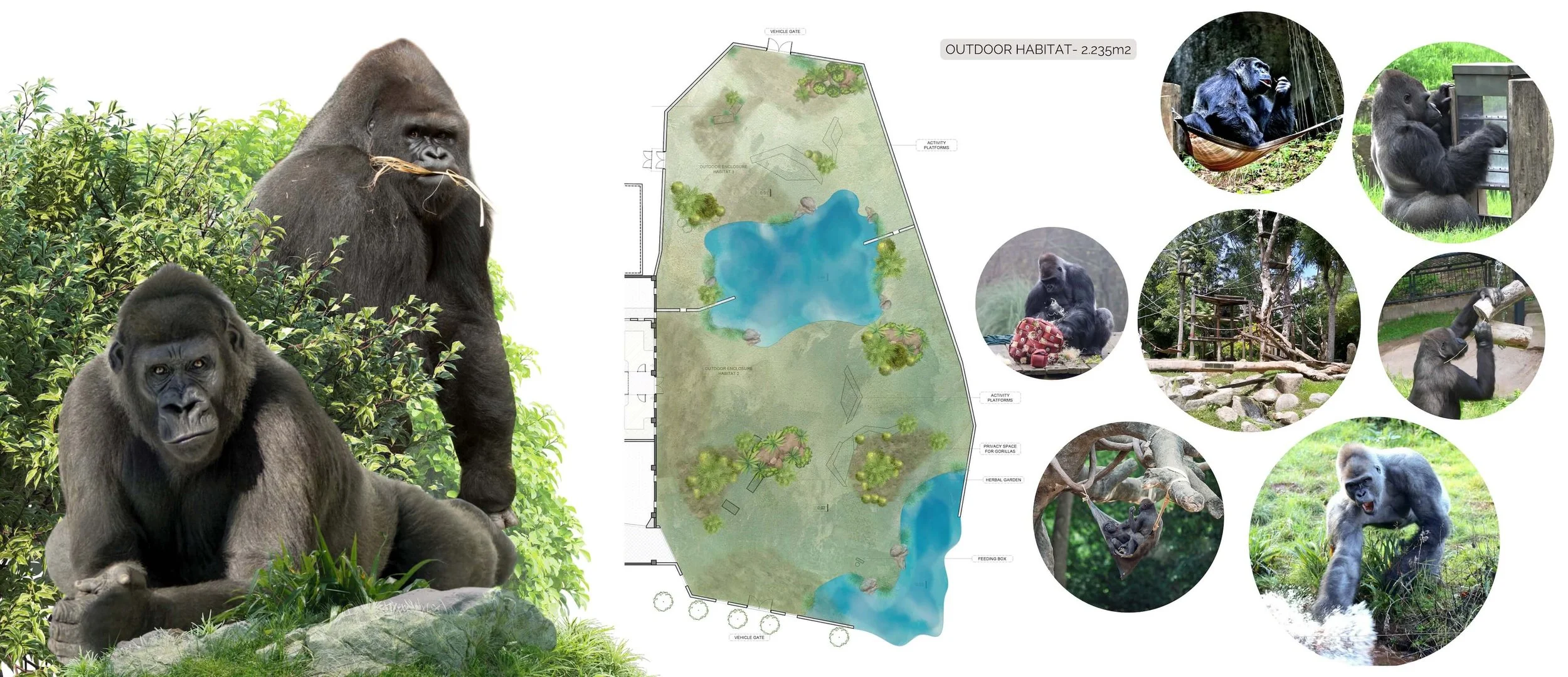
Outdoor Habitat: 2.235m2
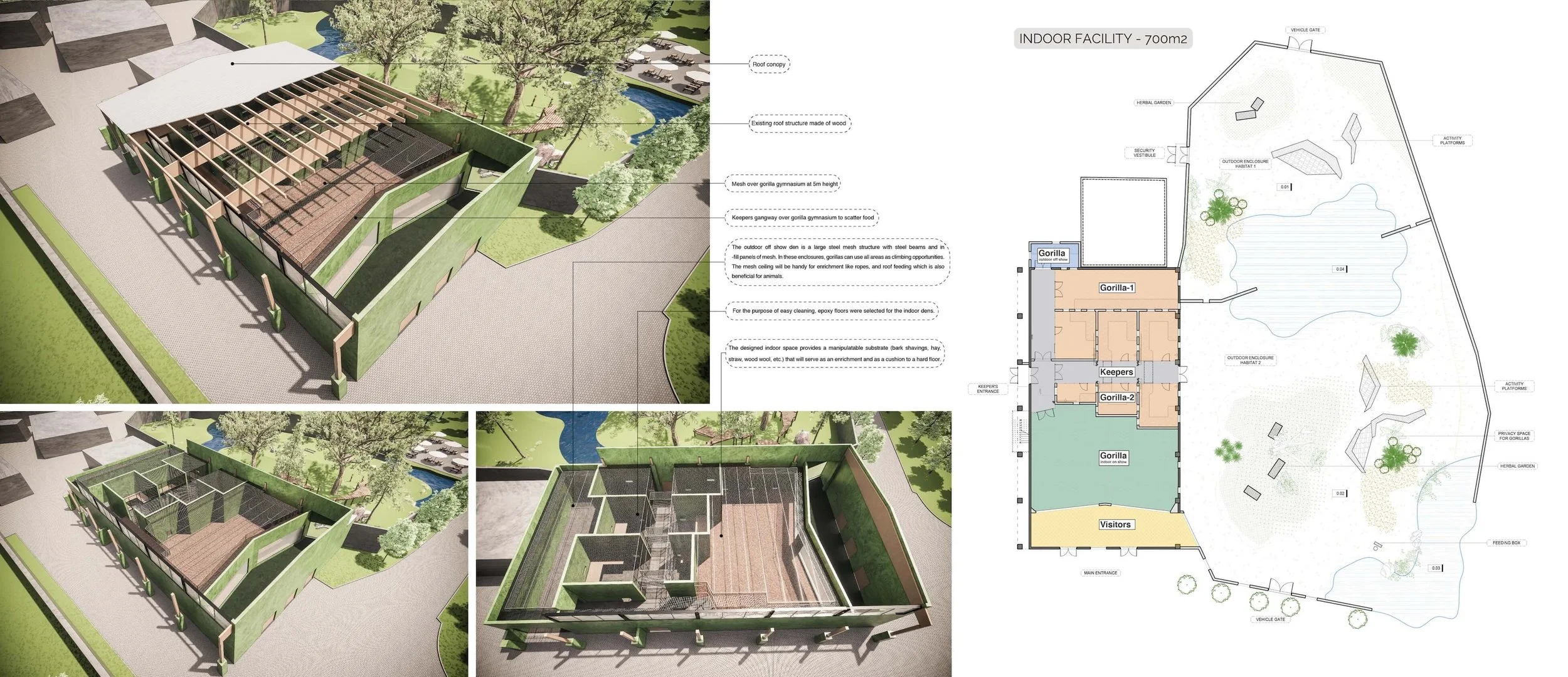
Building Facility: 700m2
The Design Response
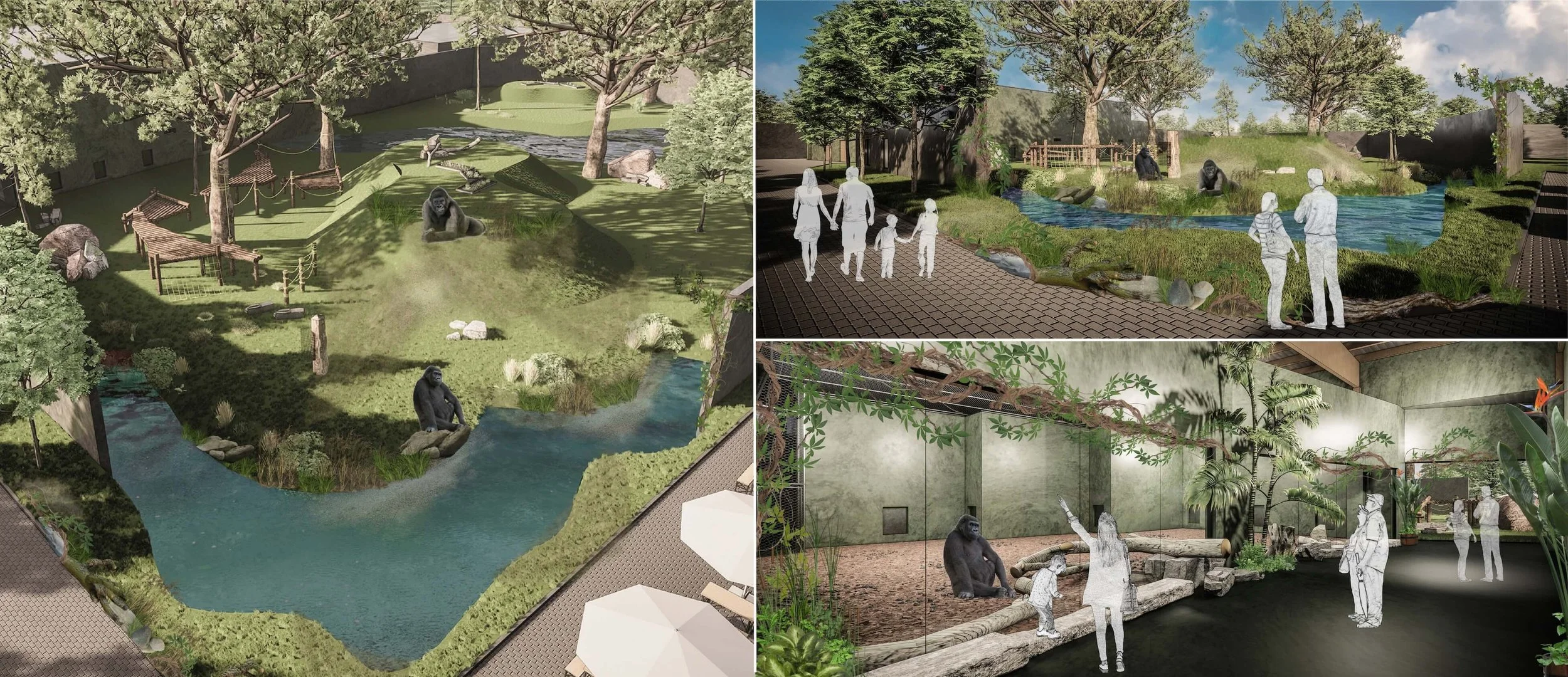
The giraffe house was retrofitted rather than replaced — a decision that saved cost, reduced construction impact, and kept the ecological footprint low. Internally, the building was reorganised into two independently closeable sections with multiple dens, flexible connections, and keeper access redesigned for safe, efficient animal management. The indoor gymnasium remains visible to visitors, offering a sheltered viewing experience regardless of weather.
Outdoors, two water features do different jobs. The first acts as a natural moat between two habitat zones — allowing the group to be joined or separated without hard barriers. The second creates a clean boundary between animals and visitors, removing the need for mesh, glass, or wall and opening up the sightline entirely. Terrain was reshaped with hills and elevations to give gorillas variety, privacy, and the ability to move in and out of visitor view on their own terms.
A herbal garden introduces zoopharmacognosy — animals self-selecting herbs for their own regulation. Built-in platforms, wooden structures, and food scattering opportunities indoors and out keep minds and bodies active. The project was developed in collaboration with consultants from Zoological Adviser.
The Animal Brief
Le Cornelle, a privately owned zoo and EAZA member, wanted to introduce gorillas into their collection for the first time.
The brief: a bachelor habitat that would meet EEP housing standards, give the animals genuine agency, and make smart use of what was already on site.
The Challenge
A concept design for a bachelor group — starting not from a blank page, but from an existing giraffe house. The structure had good height, area, and bones.
The challenge was transforming it into a fully functioning gorilla facility: flexible, safe, species-appropriate, and ready for EAZA approval.
The outdoor terrain was flat — designed for giraffes, not gorillas — and needed rethinking from the ground up.
The Outcome
Approved by EAZA’s EEP housing group and ready for the next stage. A habitat that gave gorillas a genuinely enriched environment — built from existing infrastructure, with minimal waste and maximum agency.