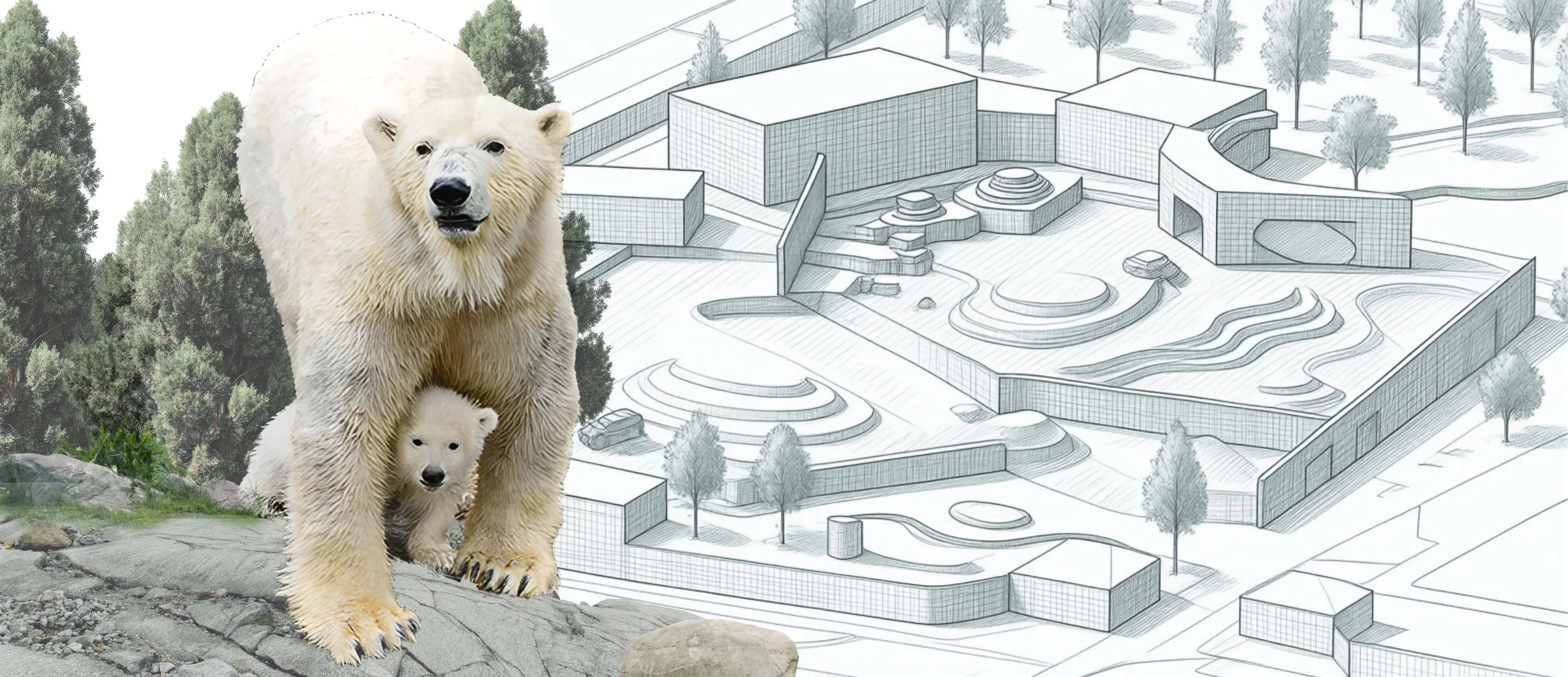
Polar Bear Habitat
Warsaw ZOO, Poland
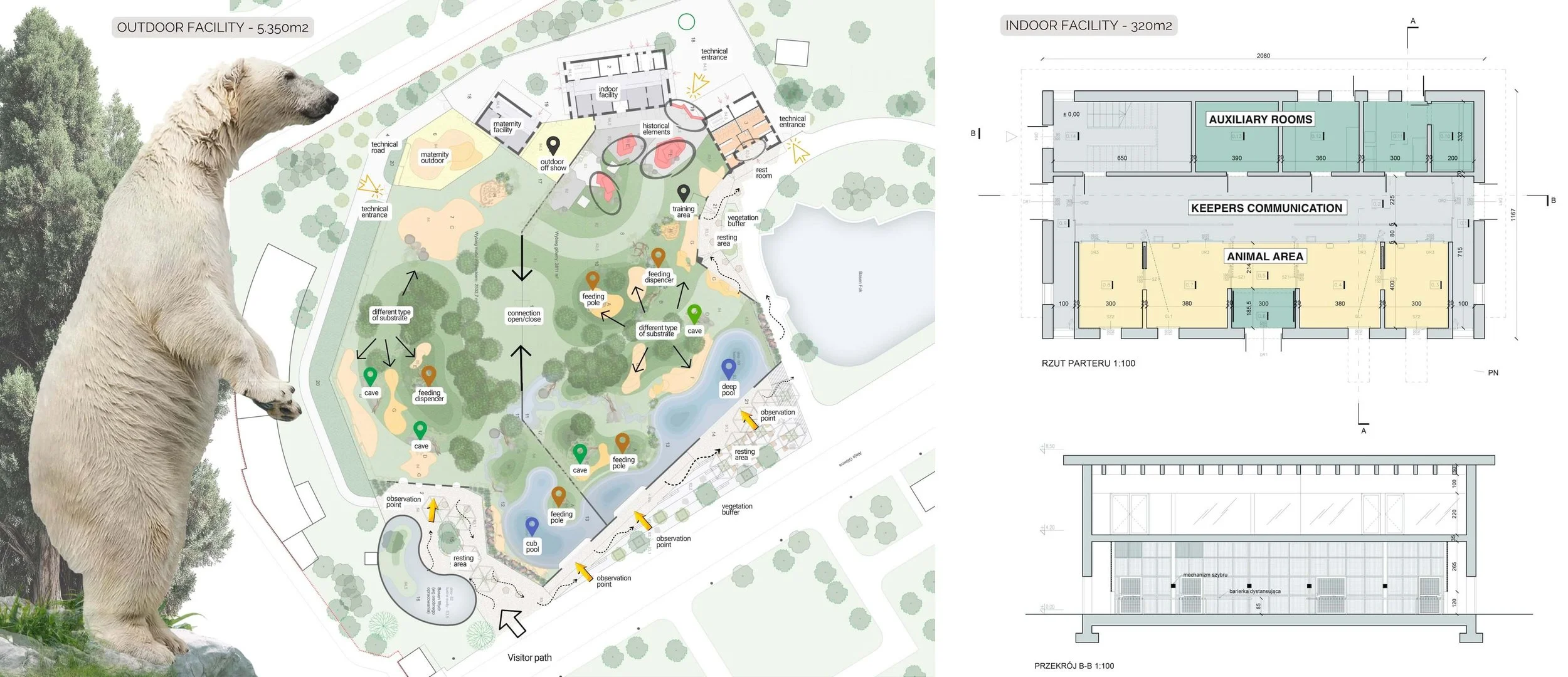
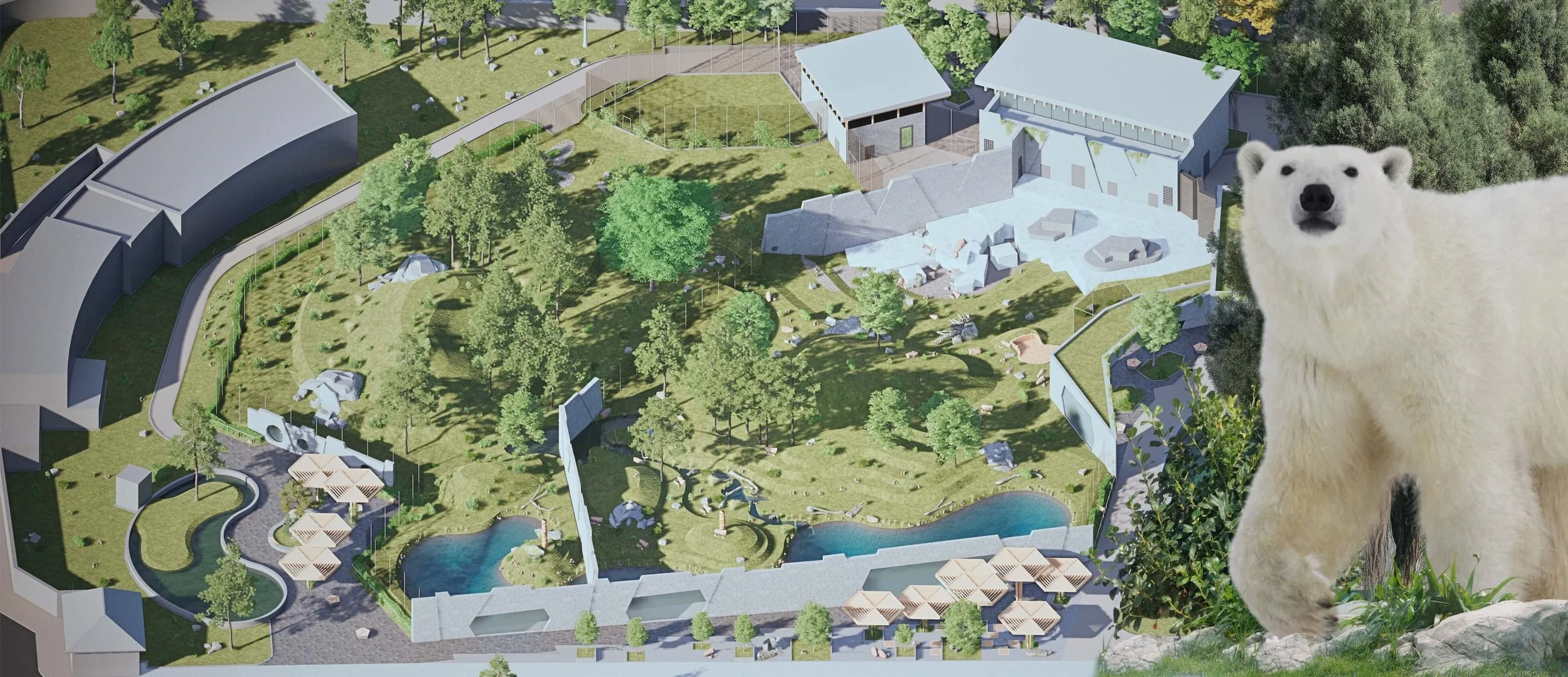
Outdoor Habitat: 5.350m2
Building Facility: 320m2
The Design Response
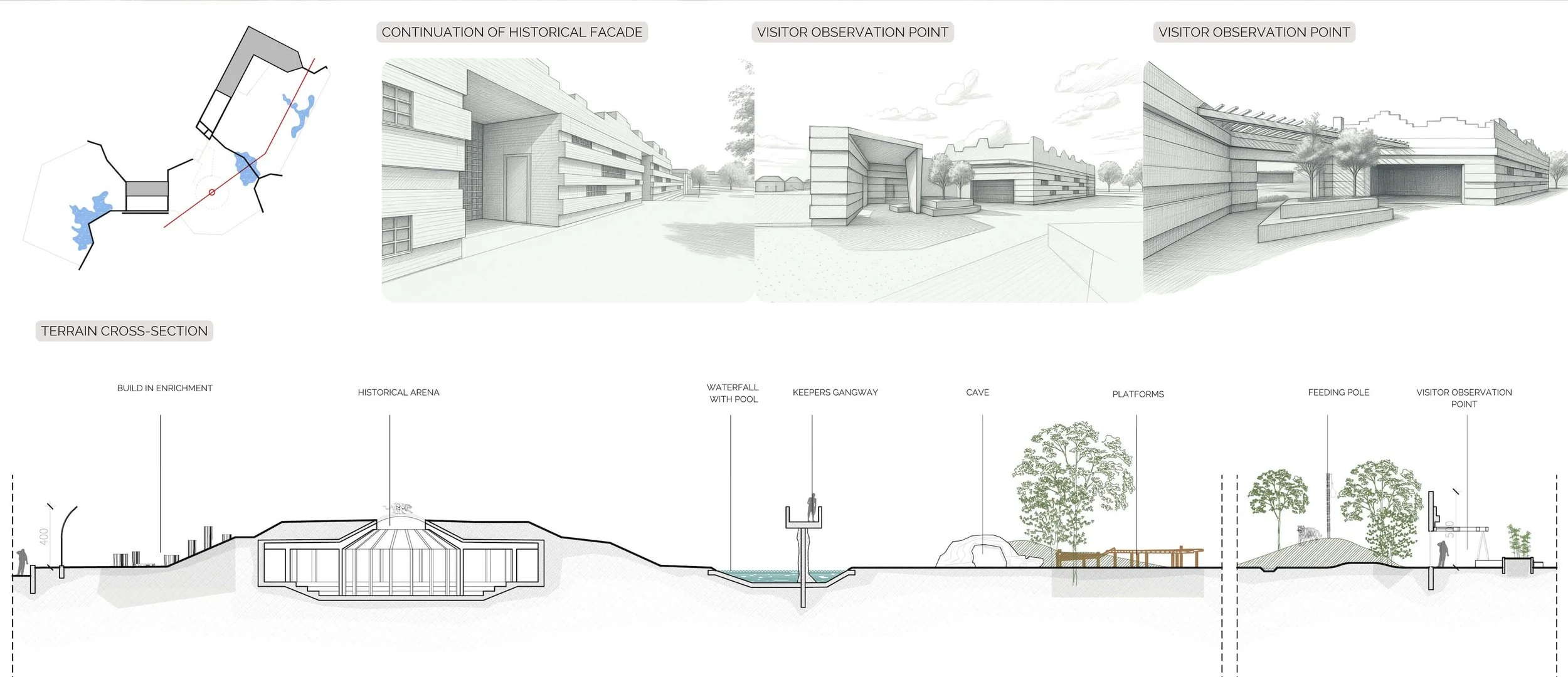
The habitat is organised to support rotational zoning, allowing keepers to shift configurations or isolate individuals without removing animals from outdoor access.
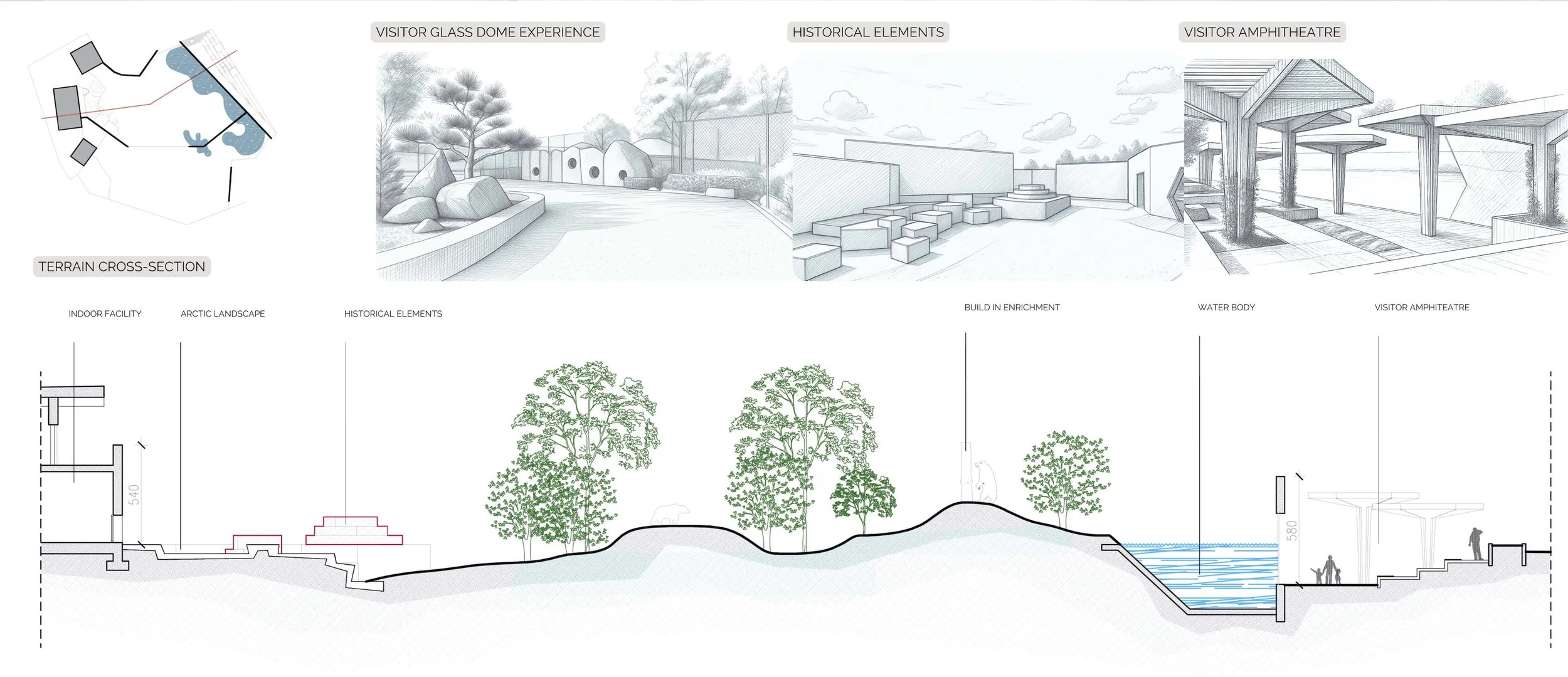
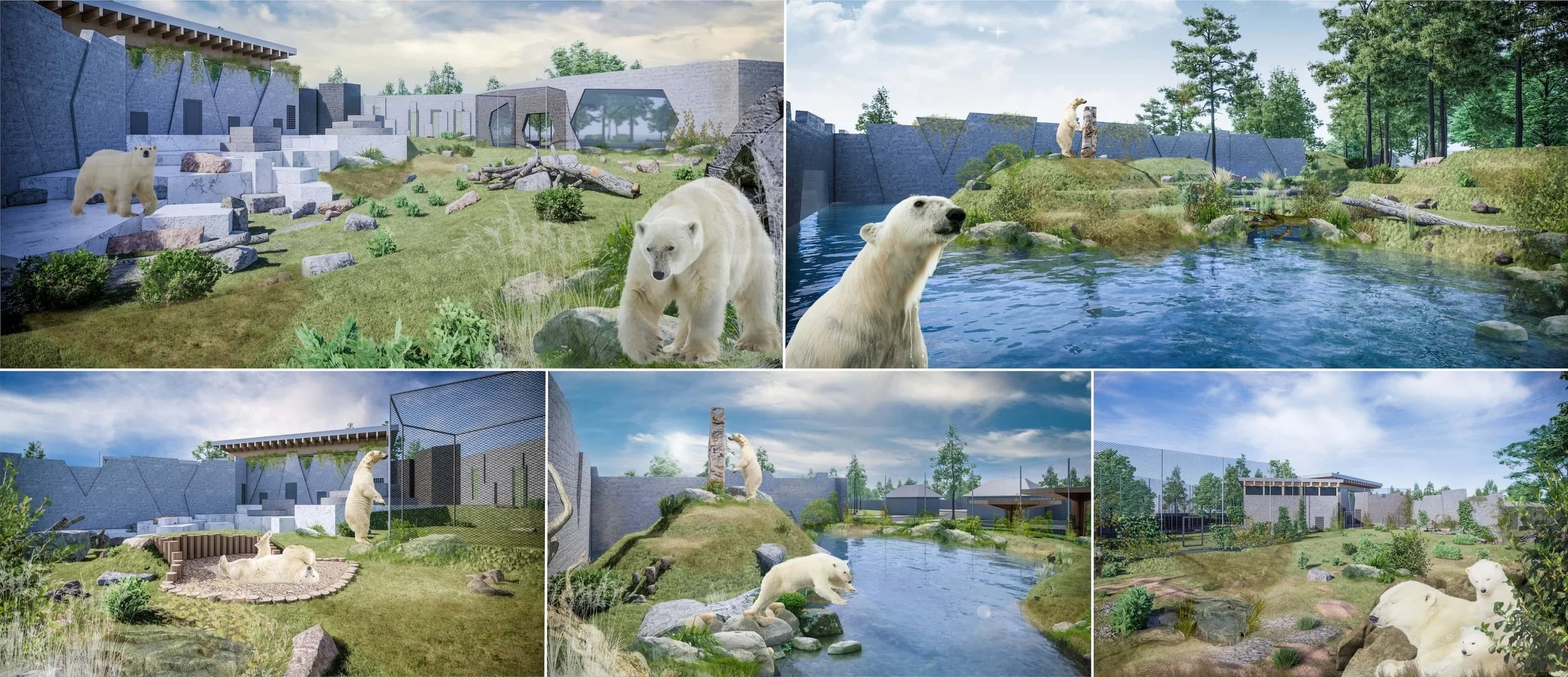
Two pools serve distinct functions — one for diving and physical stimulation, one for mothers and cubs. Enrichment is built into the structure from the start: sloped paths, a water stream, climbing areas, and sheltering niches create ongoing opportunities for micro-decisions. The environment supports the animal independently, without relying on daily intervention.
The indoor facility follows a clear linear layout with no blind spots, making daily routines — feeding, transfers, medical care — predictable and safe. A separate maternity unit with acoustic protection supports females during birth and cub-rearing.
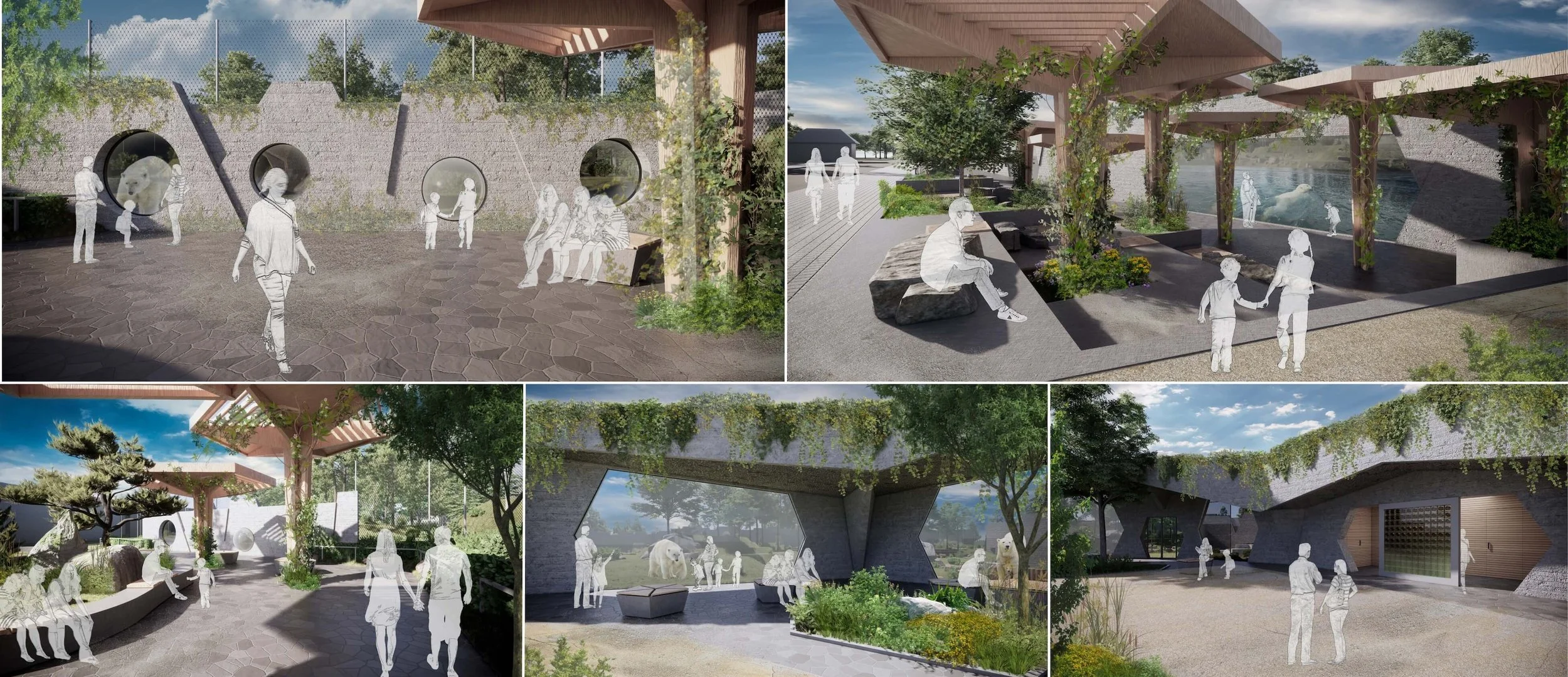
Historic elements were preserved and integrated: original wall fragments, mid-20th century rock formations, vintage mosaic tiling, and reused glass bricks. Form and materials draw from the surrounding landscape — continuity, not contrast.
The Animal Brief
Polar bears are neurologically complex animals with developed problem-solving skills, spatial memory, and emotional capacity. In low-performing habitats, these needs turn into frustration — expressed through repetitive pacing, withdrawal, or over-dependence on feeding routines.
The design had to support both biological and psychological needs, giving bears genuine control, choice, and the conditions for active, self-directed behaviour.
The Challenge
Warsaw Zoo is both an active institution and a protected monument, established in 1928 and listed under heritage conservation. Redesigning within this site required formal coordination with the conservator — balancing heritage protection with contemporary animal welfare needs.
The solution had to integrate without dominating, preserving original features while meeting modern standards for animal agency, keeper safety, and visitor experience.
The Outcome
A habitat where animal agency is structural, not supplementary. Bears have movement space, terrain variety, social flexibility, and built-in problem-solving opportunities — reducing passive coping and long-term stress. Keepers have a clear, safe workflow. Visitors experience a coherent space, shaped by neuroarchitecture principles, that supports genuine connection with nature.