Tiger Habitat
Warsaw ZOO, Poland
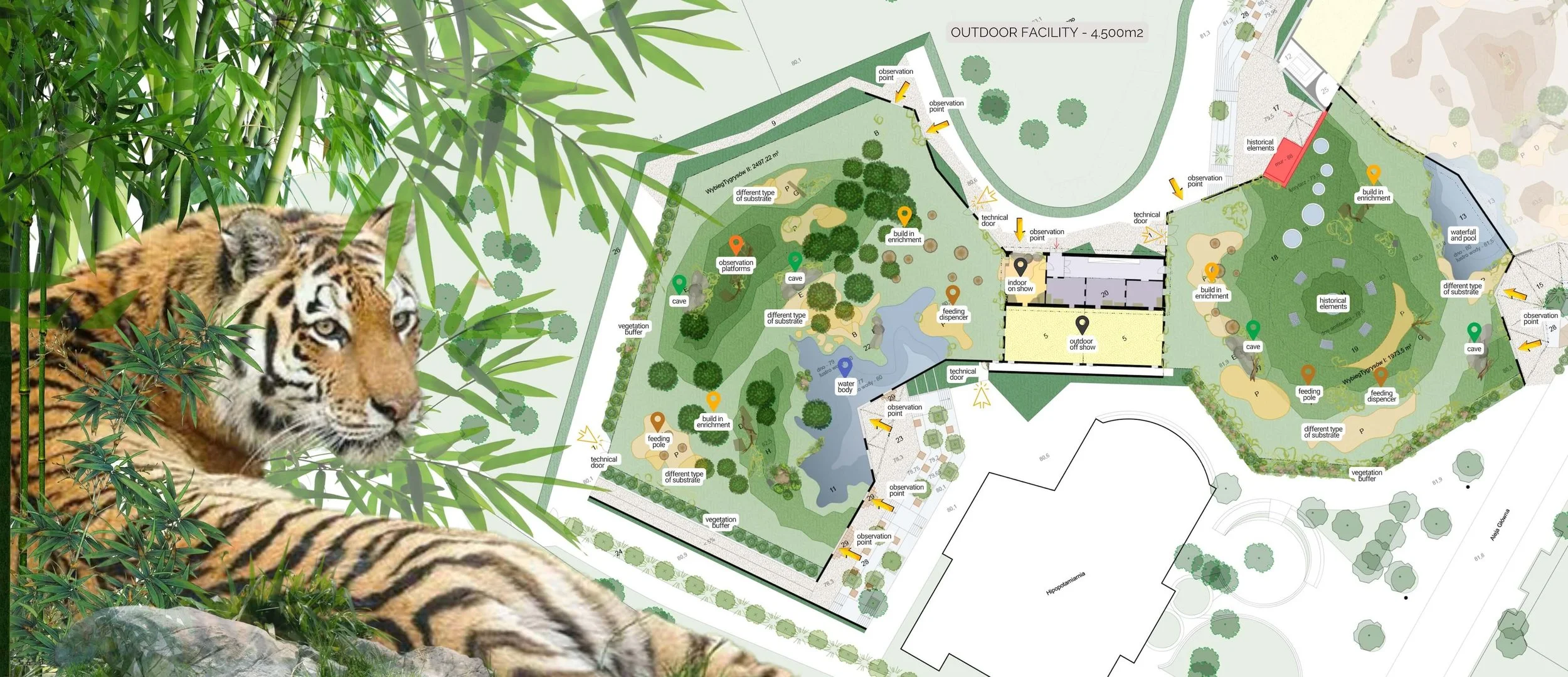
Outdoor Habitat: 4.500m2
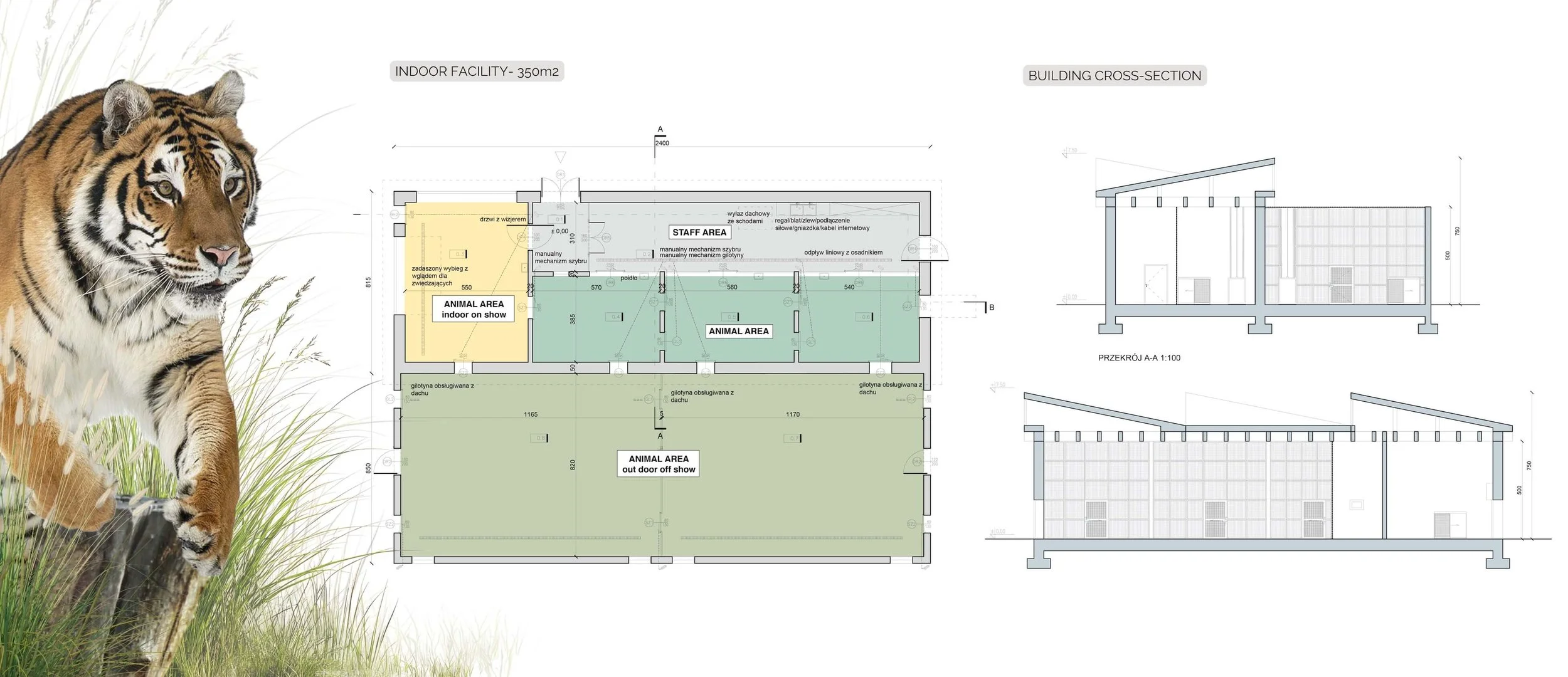
Building Facility: 350m2
The Design Response
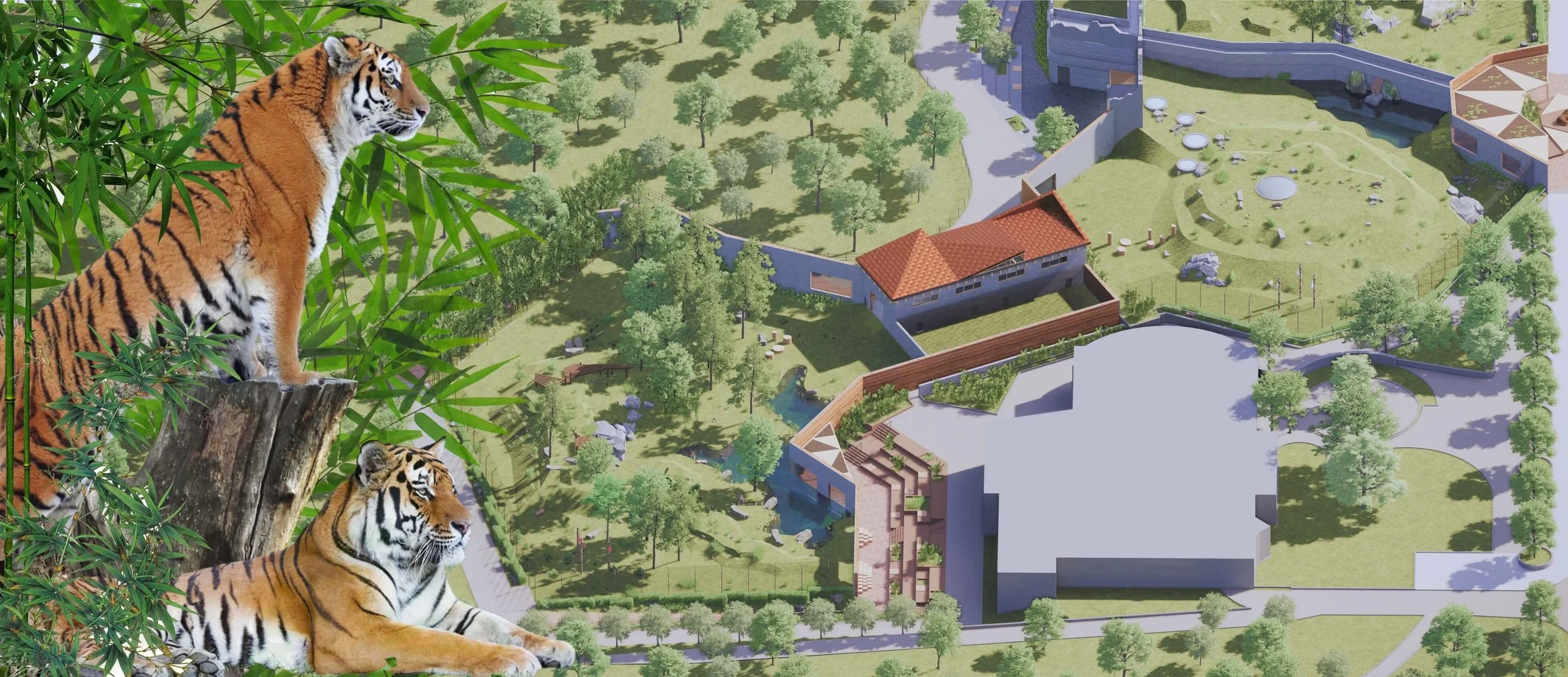
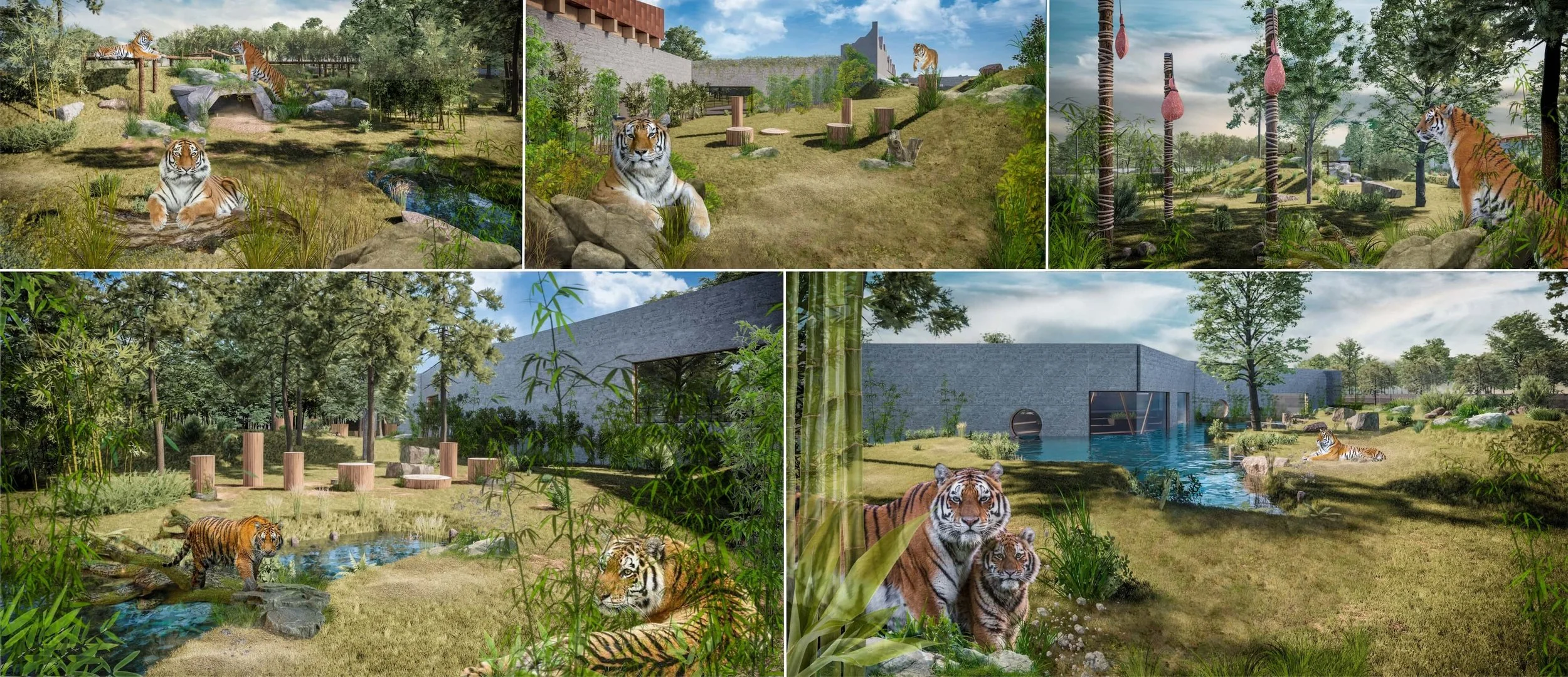
The habitat is divided into two sections, connected through an off-show outdoor area that also serves for quarantine or separation. Both sections can be opened or closed independently, giving keepers full flexibility to manage group dynamics.
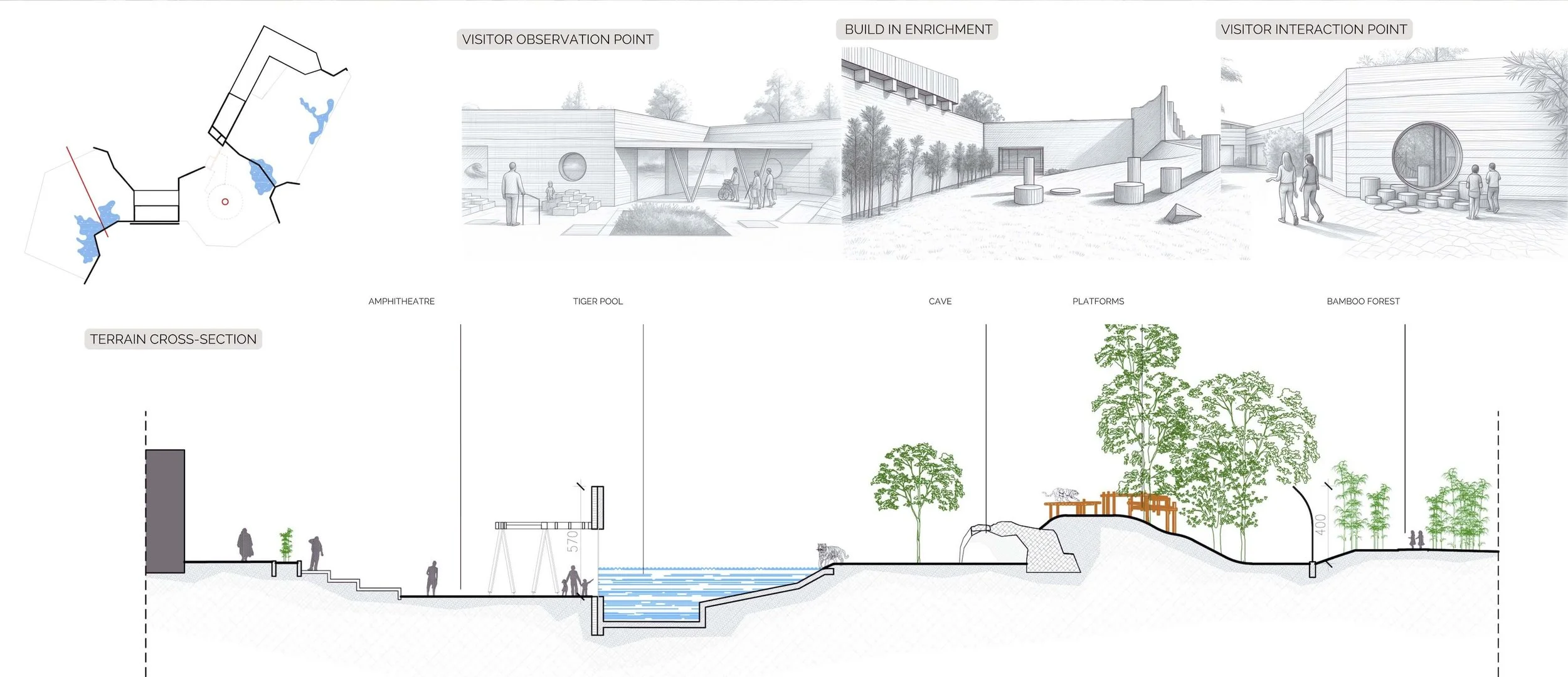
The landscape offers varied terrain, elevation changes, different substrates, and a water body. Enrichment is structural — feeding poles, food dispensers, platforms, caves, and hiding spots embedded into the landscape from the start. A mix of barriers — walls, mesh, and glass — supports scent variety while maintaining safety and visibility.
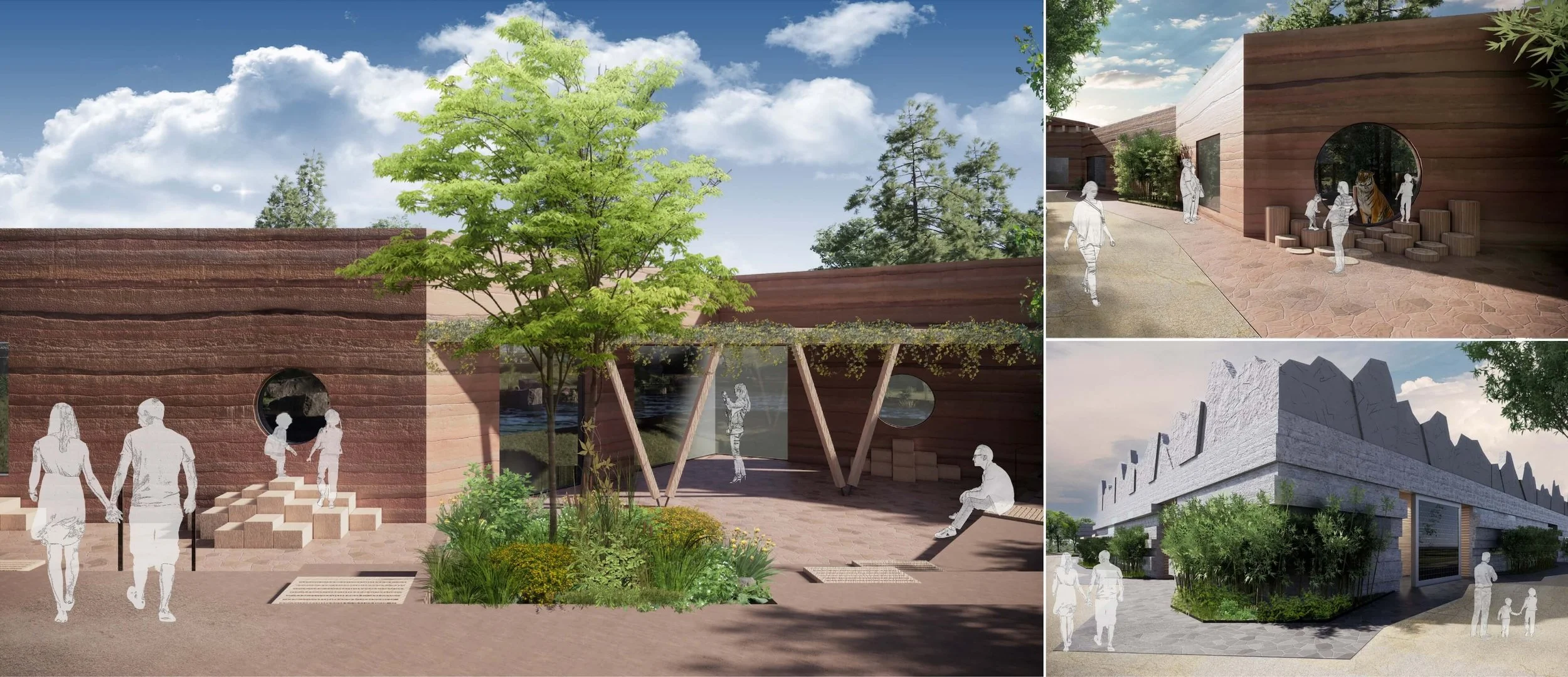
An indoor on-show area gives tigers the option to remain visible when they choose to stay inside. Multiple vantage points, interactive features, and varied viewing conditions give visitors connection with the animal across a range of settings. Rammed earth was used as the primary facade finish, integrating the new build into the character of the historic site.
The Animal Brief
Amur tigers are solitary, territorial animals with a strong drive to patrol, hunt, and control their environment. The design had to support these instincts — providing spatial complexity, sensory variety, and the conditions for self-directed behaviour. Without built-in stimulation, these needs turn into frustration and passive coping.
The Challenge
Warsaw Zoo is a listed historic garden, requiring close coordination with the heritage conservation department. The design had to respect the site’s architectural character while delivering a modern animal facility.
A key element of the original exhibit — an underground arena with a glass brick dome — was preserved and integrated into the new habitat as a central landscape feature.
The Outcome
A habitat that meets Amur tiger behavioural complexity through agency and built-in enrichment. Animals have spatial control, sensory variety, and continuous opportunity for self-directed activity. Visitors have an immersive, multi-perspective experience rooted in neuroarchitecture principles, within a site that honours its historical character.