Rhino Hospital
South Africa
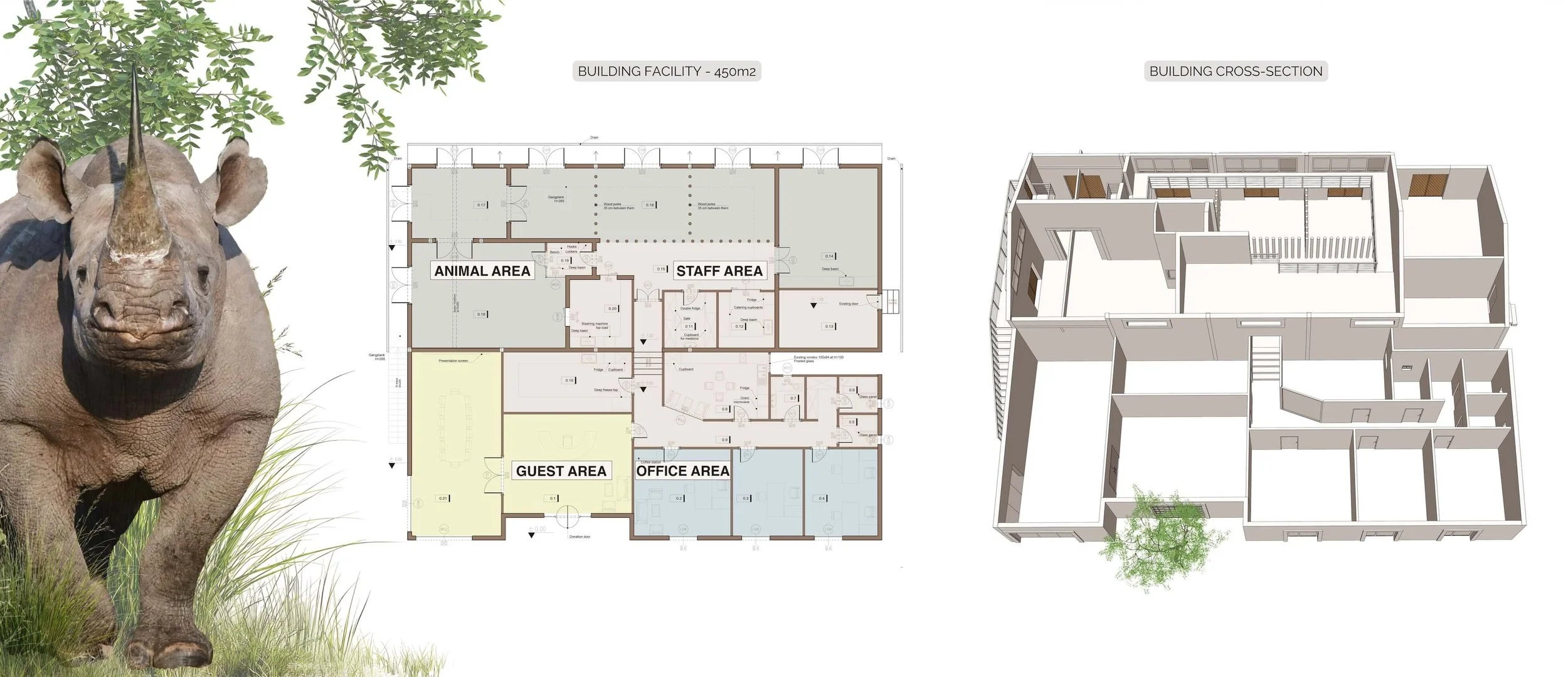
Building Facility: 450m2
The Design Response
The facility is organised into two distinct zones with clear separation to prevent contamination and unnecessary movement between areas.
The staff and administrative block houses offices, a reception, meeting rooms, labs, and a pharmacy — everything the team needs to operate efficiently. A separate chamber accommodates smaller wildlife requiring individual care. The first floor provides storage and space for students and researchers.
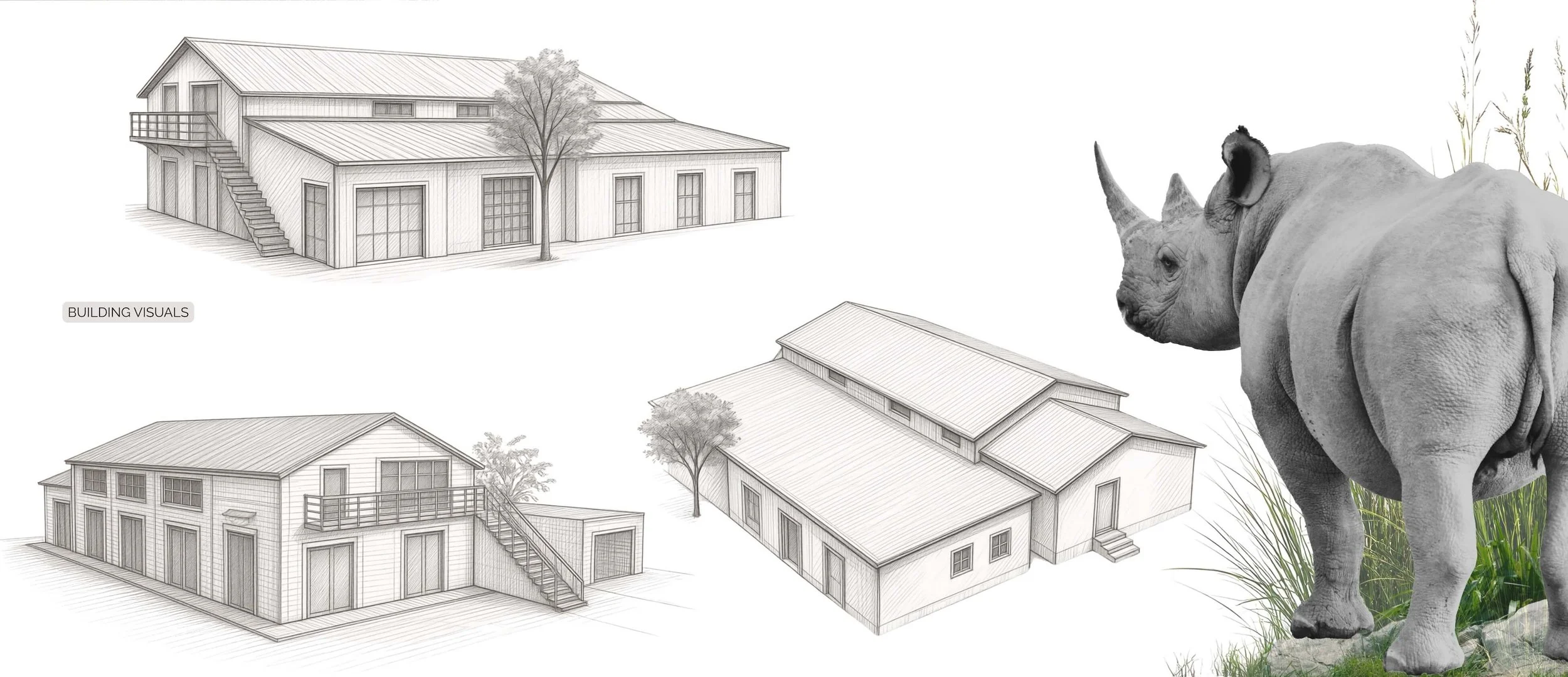
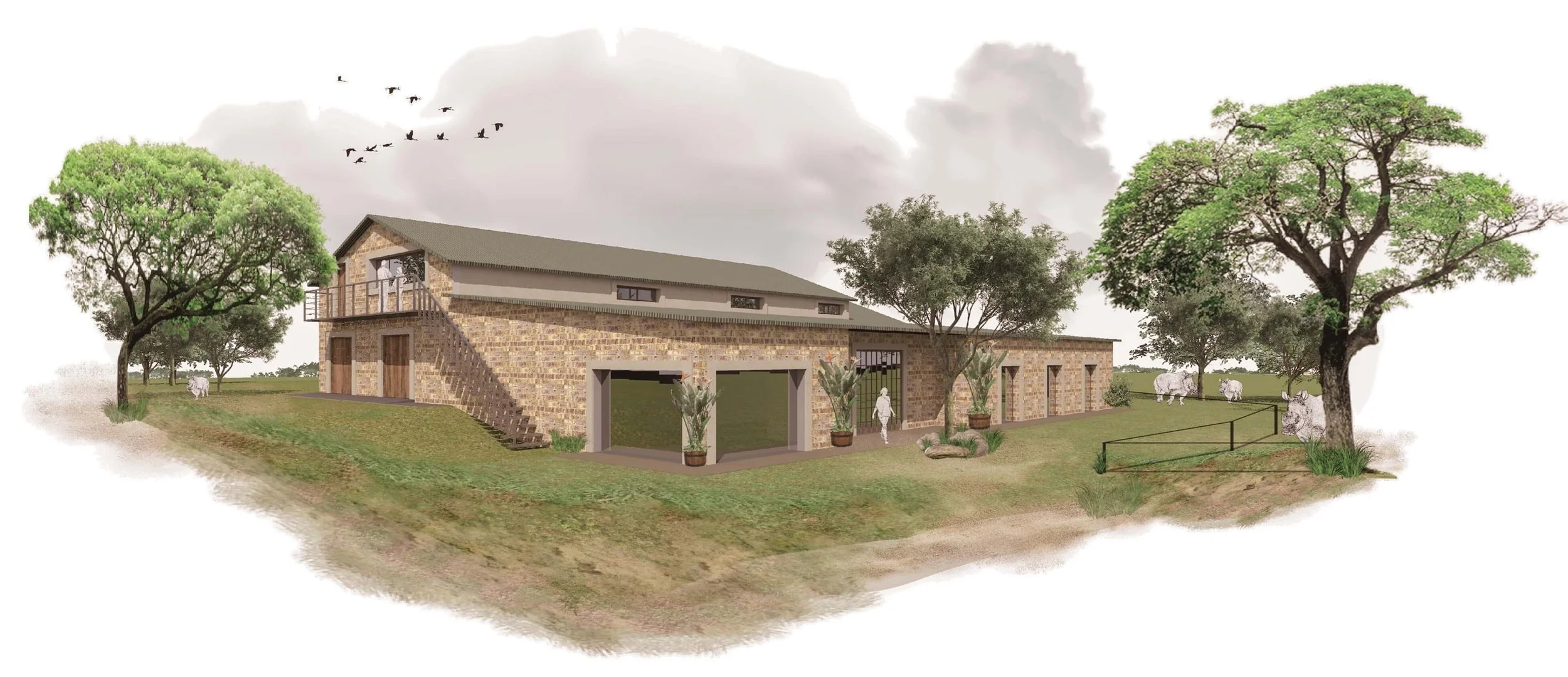
The veterinary block is designed for maximum flexibility in animal management. It includes an operating theatre, a recovery room, and individual dens for recuperation. An elevated walkway overlooks the animal area, and a separate outdoor walkway with a viewing window into the operating theatre allows observation without disruption. A welcoming entrance and visitor area supports meetings, conferences, and lectures.
The Animal Brief
The facility was designed primarily for rhinos, with capacity to accommodate other injured wildlife. Animals arriving at the sanctuary are often in acute stress — injured, displaced, and disoriented. The design had to prioritise calm, safety, and recovery: spaces that reduce sensory overload, support medical intervention, and give animals the conditions to heal and, where possible, return to the wild.
The Challenge
Designing a wildlife hospital requires understanding how animals move, rest, and respond to their environment under stress. To get this right, the design process began on-site — observing daily operations, working alongside the veterinary and keeper teams, and understanding their needs firsthand. That direct immersion shaped every decision in the building.
The Outcome
A facility where injured wildlife can recover in calm, safe conditions — and where veterinary teams have the space, organisation, and infrastructure to do their best work. Designed from the inside out, shaped by direct observation and built around the real needs of both animals and people.